Septic Engineer in Clyde, NY and Galen
The village treats its sewage at a plant on the Clyde River. Out in Galen, homes are on septic and many sit near muck and wet flats. We run the tests, coordinate the stamped design and install it.
Fees. Process. Answers.
Septic design for the Village of Clyde and the Town of Galen.
The Village of Clyde has a wastewater treatment plant that discharges to the Clyde River and Erie Canal. Homes outside the village in the Town of Galen use septic systems.
The Galen Zoning and Codes page lists $20 for a new septic system or leach field and $10 for a septic tank replacement only.
Town of Galen Zoning and Code Enforcement Office, 6 South Park Street, Clyde, NY 14433.
Muck is not usable soil for treatment. The field needs mineral soil, either found elsewhere on the lot or placed as fill under an approved design.
No. That law covers properties in Seneca County within 250 feet of the Clyde River and other waters. Clyde is in Wayne County.
The NYSDOH Geneva District Office, (315) 789-3030, per the 2026 directory.
Send the address through the form. Estimate in 1 hour.
Clyde in two sentences
The Village of Clyde has a wastewater treatment plant, about 50 years old and slated for upgrades, that discharges to the Clyde River and Erie Canal, and the state funded ultraviolet disinfection there. Outside the village, homes in the Town of Galen use septic systems, permitted by the Galen Zoning and Code Enforcement Office at 6 South Park Street, Clyde.
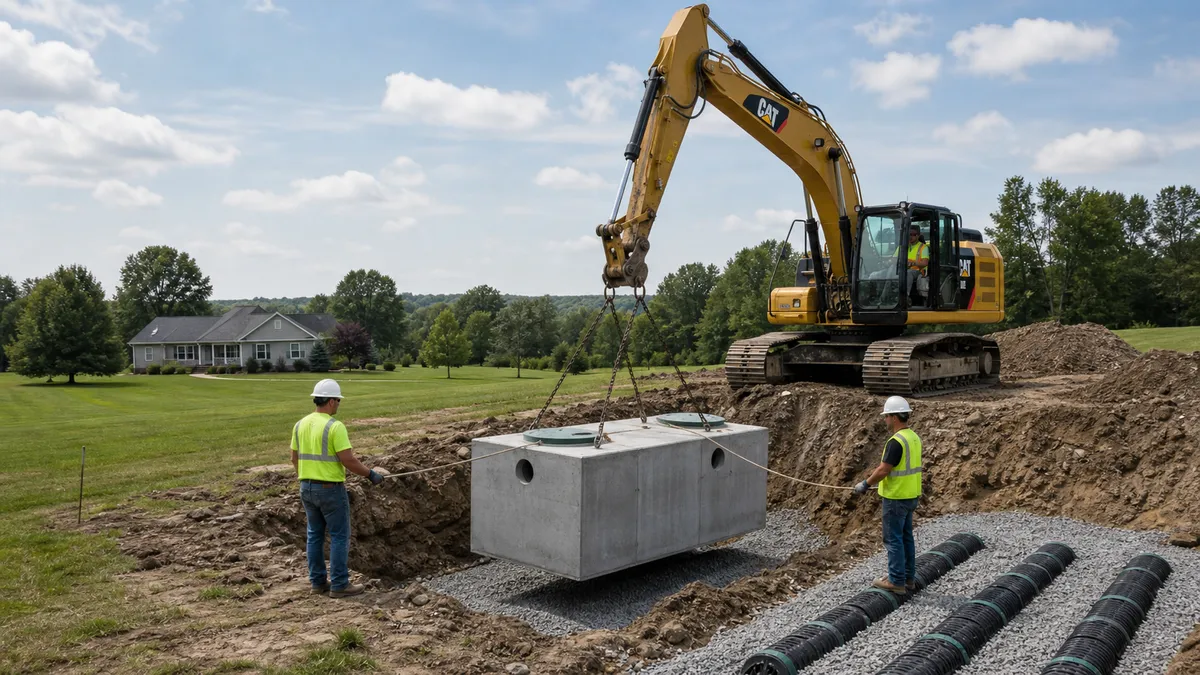
Designs are prepared and stamped by a New York licensed Professional Engineer (PE). Backwell coordinates the design, the town submittal, and the install.
Galen permit and fees
Galen's Zoning and Codes page lists the well and septic permit fees: $20 for a new well or septic system or leach field, and $10 for a septic tank replacement only. It lists an approximate time of one to two days from application to permit and links to the state septic regulations. The design standard is 10 NYCRR Appendix 75-A, and the 2026 NYSDOH directory lists the Geneva District Office, (315) 789-3030, as the state environmental health office for Wayne County.
Downstream, the Clyde River crosses into Seneca County, where Local Law 7 of 2021 puts properties within 250 feet of the Clyde River on five year septic inspections. That law applies in Seneca County, not in Galen, but it shows how closely the river corridor is watched.
Clyde soils
The drumlins around Clyde carry Honeoye silt loam, very deep and well drained, and Lima silt loam, moderately well drained, over calcareous till. The Clyde River floodplain and the canal lands run through Canandaigua silty clay loam and Lyons silt loam, both poorly to very poorly drained, and pockets of organic muck where old swamps were.
Muck is not usable soil for a septic field. It holds water and does not treat effluent the way mineral soil does, so a lot with muck at the surface has to find mineral soil elsewhere or bring it in. A raised system needs at least one foot of original soil faster than 60 minutes per inch over the restrictive layer, with high water at least a foot down. On the drumlins, a conventional trench field with four feet of usable soil is often possible. Floodplain ground below the 10 year flood level is unacceptable under 75-A.
How it works in Galen
- Address and plan. Estimate in 1 hour.
- Floodplain and muck check. Before any test hole, so the testing lands on usable ground.
- Perc tests and deep hole. Two perc tests minimum and a hole at least six feet deep.
- PE stamped plan. System type from the soil data, with reserve area and all separation distances.
- Galen permit. Filed with the Zoning and Code Enforcement Office, 6 South Park Street.
- Install and close out. Built to Appendix 75-A and inspected under the town's process.
What gets checked
- Usable mineral soil depth over muck, clay and seasonal high water.
- Field 100 feet from the river, the canal, wetlands and wells; tank 50 feet.
- Distribution box within 12 inches of grade or with an extension to grade.
- Footing, roof and cellar drainage excluded from the system.
Clyde problems and fixes
Muck at the surface
Find the mineral soil on the parcel, or remove unusable material and build a fill system where the code allows it.
Tank collapsed, field still works
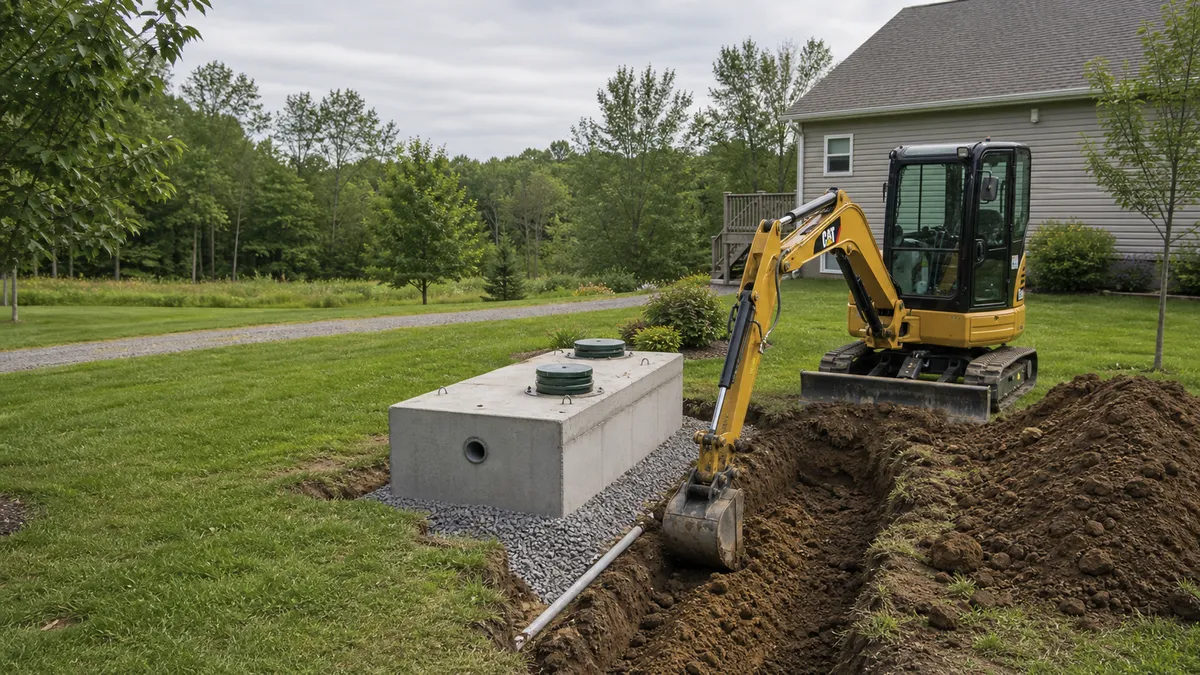
Galen lists a separate $10 permit for a tank replacement only. The new tank is sized to bedrooms under 75-A Table 3.
Flooded field every spring
Check for footing or sump drainage tied in. If the field sits low, the replacement moves to higher ground or goes up in fill.
Timeline
Galen lists one to two days from application to permit. Testing and design come before that and the install after it. Spring testing tells the truth about water on the flats.
Sources
- NYS DOH, 10 NYCRR Appendix 75-A, Wastewater Treatment Standards, Residential Onsite Systems
- NYS DOH Center for Environmental Health Directory 2026 (district offices and county health departments)
- Town of Galen, Zoning and Codes (well and septic permit fees)
- NYS Regional Councils, Village of Clyde Wastewater Treatment Plant Disinfection
- LaBella, Village of Clyde Wastewater Treatment Plant Improvements
- Seneca County Health Department, What is the Seneca County Watershed Protection Law?
- USDA NRCS Official Soil Series Description, Honeoye
- USDA NRCS Official Soil Series Description, Lima
- USDA NRCS Official Soil Series Description, Canandaigua
- USDA NRCS Official Soil Series Description, Lyons
Rules and fees as published by each office on the date this page was written. They can change; the design is checked against the current versions at submittal.
More around Clyde.
Nearby towns
Septic engineer in LyonsSeptic engineer in NewarkSeptic engineer in WaterlooSeptic engineer in ConquestDesign and site problems
Wet yard or wetlandRaised bed septic designHigh water tableFailing or backing upConventional septic designTell us about the Clyde property.
Send the address. Estimate in 1 hour.
Free Written Estimate
Estimate in 1 hour.