Septic Engineer in Watertown, NY
Limestone close to the surface is the Watertown septic problem. Outside the city sewer and the town sewer districts, we test, coordinate a PE stamped design, file and build systems that fit the rock.
Soil. Design. Permit.
What a septic design and install in Watertown includes.
Much of the limestone plain has very shallow soil. The Galoo series, established in Jefferson County, has bedrock about 3 to 9 inches down, far short of the 4 feet a conventional field needs.
Parts of it. The town lists sewer districts for the Lettiere Tract, the Route 3 area, the 12F industrial park, the US 11 area and the Cook Road subdivision. Other lots are on private septic.
Appendix 75-A allows a mound where bedrock is at least 2 feet below the natural surface, high groundwater is at least 1 foot down, native soil is faster than 120 minutes per inch and slopes are 12 percent or less.
Yes. The Jefferson County code office lists engineered septic plans as required when a new system is installed, and a building permit for all septic installations.
The state lists its Watertown District Office (317 Washington St., Watertown) as the environmental health office for Jefferson County, and 10 NYCRR 75.5 requires raised, mound and sand filter plans to be approved by the health department with jurisdiction before construction. The county code office requires engineered septic plans with the building permit for a new system.
Yes, if the lot qualifies. Jefferson County Planning reimburses 50 percent of eligible costs up to $10,000 per system for properties within 250 feet of a listed priority waterbody, outside a sewer district, with a system that is failing or likely to fail.
Septic design in Watertown: the short answer
Inside the City of Watertown, homes are on city sewer. The Town of Watertown has its own sewer districts along the main corridors, and outside those, homes treat their own wastewater. A new house or a failed field on those lots needs a septic design stamped by a PE.
Short answer: shallow limestone is the defining condition on the Black River limestone plain around Watertown. Where rock sits within a few feet of grade, a conventional field cannot get 4 feet of useable soil, and the design goes to a mound or raised bed built on imported sand.
Sewer or septic in and around Watertown
The Town of Watertown lists numbered sewer districts: District 1 at the Lettiere Tract, and Districts 2 through 5 covering the NYS Route 3 area, the NYS 12F industrial park, the US Route 11 area and the Cook Road subdivision, with a proposed extension of District 2.
Off those corridors, the town and its neighbors are on private systems. Jefferson County's septic replacement program lists the minor tributaries to the Black River among its priority waters, so a failing system close to one of those streams may qualify for grant money.
How a septic design works in Watertown
- Send the address and a few photos. Use the form below. Estimate in 1 hour for the design, the submittals and the install.
- Confirm the lot needs septic. Check whether the lot is in the city or one of the Town of Watertown sewer districts. Outside them, plan on septic.
- Deep hole and perc tests. Appendix 75-A calls for at least one test hole at least six feet deep at the proposed leaching area and at least two percolation tests for each system. Expect the pit to hit limestone, sometimes only inches down on the thinnest ground, and look for perched water on top of the rock.
- Design and stamp. Designs are prepared and stamped by a New York licensed Professional Engineer (PE), sized at a minimum of 110 gallons per day per bedroom for new construction.
- Health department review for alternative systems. Under 10 NYCRR 75.5, a raised bed, mound or sand filter needs its plans reviewed and approved by the State or county health department with jurisdiction before construction. The state lists its Watertown District Office (Dulles State Office Building, 317 Washington St., Watertown) as the environmental health office for Jefferson County.
- Building permit. The Jefferson County Fire Prevention and Building Code Department, 175 Arsenal St., Watertown, enforces the Uniform Code in the 31 municipalities that chose not to enforce it locally. It requires a county building permit for the installation of all septic systems and engineered septic plans when a new system is installed. If your city, town or village enforces the code itself, the permit comes from that office instead.
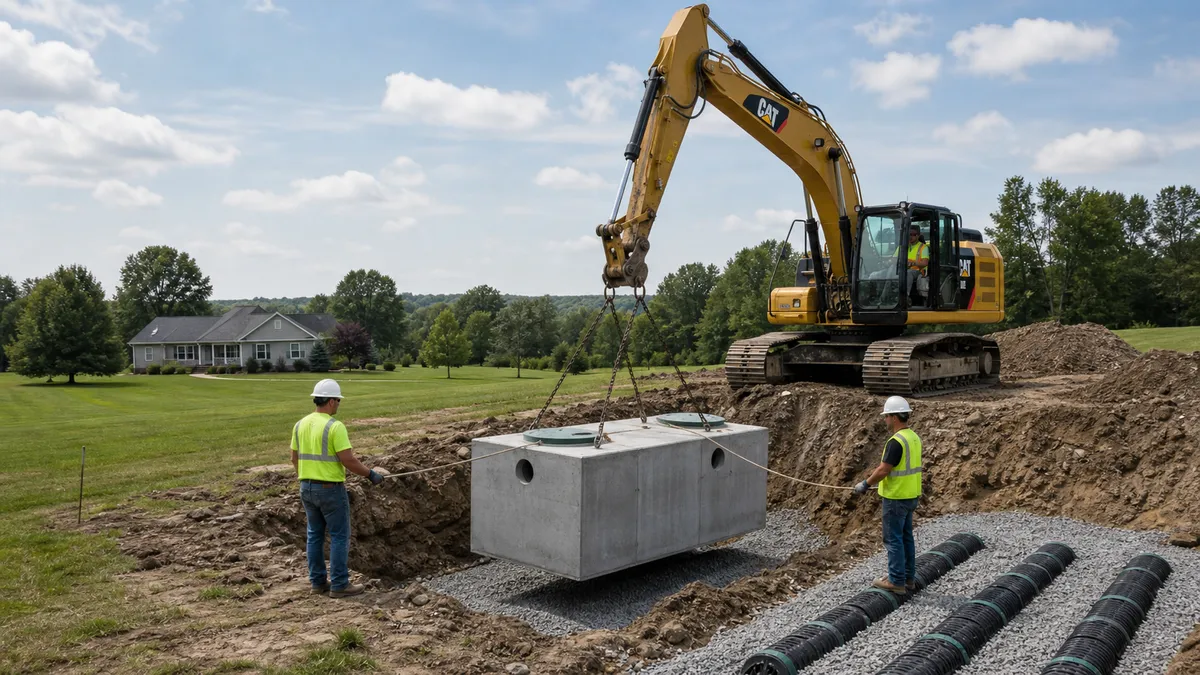
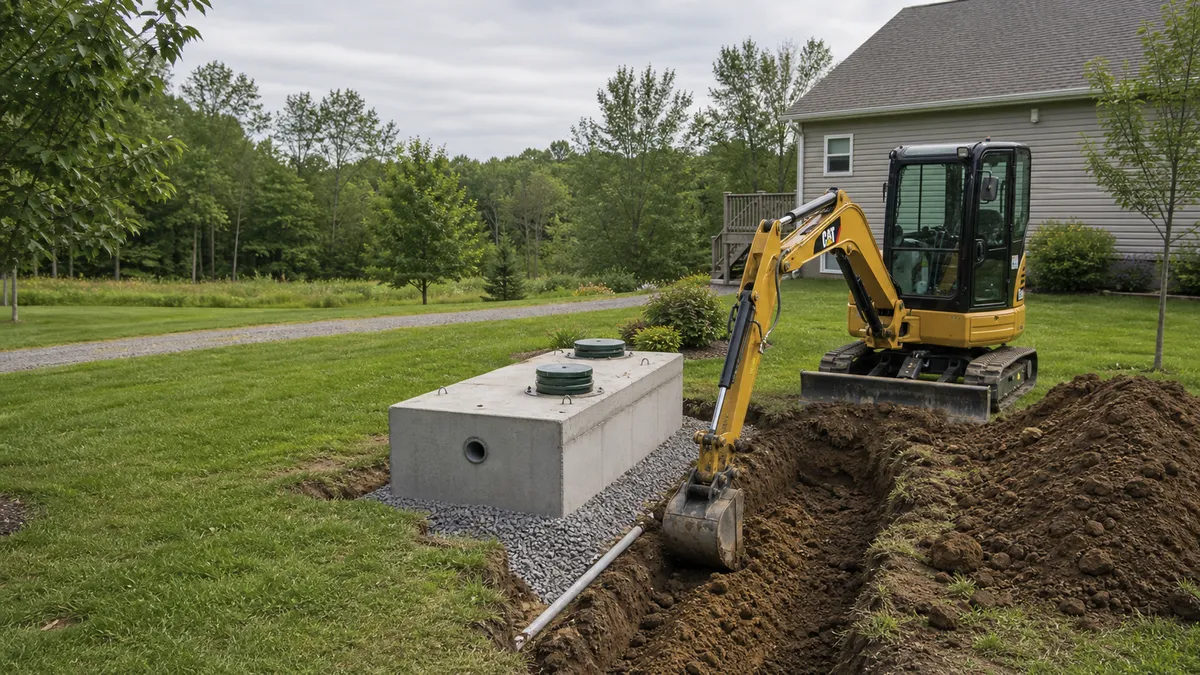
- Install and certify. Backwell coordinates the excavation and builds the system to the approved plan. On an alternative system, a design professional supervises construction and certifies it to the health department.
Soils and seasonal water around Watertown
The Galoo soil series was established in Jefferson County and described from a site in the Town of Henderson. The USDA describes Galoo as very shallow, with limestone or calcareous sandstone bedrock at 8 to 23 centimeters, about 3 to 9 inches, on bedrock controlled landforms with short escarpments and level areas of exposed rock. Galoo soils are extensive locally on the Ontario Lake Plain and in the St. Lawrence and Black River valleys.
Deeper pockets carry calcareous till such as Hogansburg and Grenville loams; Hogansburg is moderately well drained, Grenville well drained. Newstead silt loam, somewhat poorly drained with bedrock at 20 to 40 inches, sits where water perches on the rock. Each has a different septic answer, so the test pits matter.
What the health department checks
Jefferson is one of the counties New York serves through a state district office for environmental health: the NYSDOH Watertown District Office covers Jefferson and Lewis Counties. The design standard is the same statewide Appendix 75-A. For a lot in Watertown these are the items that decide the design:
- Mound: high groundwater at least 1 foot down, bedrock at least 2 feet down, native soil faster than 120 minutes per inch, slope no more than 12 percent, pressure distribution, and an absorption area no wider than 20 feet.
- Raised system: 1 to 2 feet of original soil faster than 60 minutes per inch, high groundwater at least 1 foot below the surface, fill that percs between 5 and 30 minutes per inch, and a taper no steeper than 1 on 3 with at least 20 feet of taper.
- Conventional trench field: at least 4 feet of useable soil above rock, tight soil and the high seasonal groundwater, with the highest groundwater at least 2 feet below the trench bottom.
- 100 feet from an absorption field to a well or suction line, 200 feet if the field sits upgrade and in the drainage path to the well, and 50 feet from the septic tank to a well.
Common Watertown site problems and the design fix
Limestone 9 inches down
On Galoo ground a mound needs bedrock at least 2 feet below the natural surface. If the rock is shallower than that across the lot, no Appendix 75-A subsurface system fits, and the PE looks for a deeper pocket of till elsewhere on the parcel.
Rock at 2 to 3 feet
With bedrock at least 2 feet down and the native soil faster than 120 minutes per inch, a pressure dosed mound in clean sand is the usual design. Fractured or porous bedrock is exactly the case the mound standard was written for.
Wells in creviced limestone
The field must be 100 feet from a well, 200 if upgrade in its drainage path, and 50 percent farther when the well draws from less than 50 feet down. Over a drinking water aquifer, the health department may require more separation to bedrock.
What it costs
We did not find a published plan review fee for a single home from the state district office or the county code office, so none is quoted here. The county code office bills the building permit fee after it checks your application.
Design and install are priced together in writing for the lot, because the soil picks the system. Mounds on shallow rock are usually the highest cost designs because of imported sand, a dosing tank and pressure distribution.
Grant money: Jefferson County Planning runs the NYS Septic Replacement Fund. The county flyer says homeowners may be reimbursed 50 percent of eligible costs up to $10,000 per system when the property is within 250 feet of a listed priority waterbody, the system is failing or likely to fail, and the lot is not in a sewer district. The county steps are: check the map, apply, hire a licensed contractor and engineer, then submit receipts.
Timeline
Test pits, stamped design, state review for any alternative system, county or local building permit, install, then the design professional's certification on alternative systems.
Mound sand needs no settling period. A raised bed with finer fill must settle six months through a freeze and thaw cycle. The schedule is in the written price.
Sources
- NYS Department of Health: District Environmental Health Programs
- Jefferson County Fire Prevention and Building Code Department: Building Permit Process
- Jefferson County Planning: NYS Septic Replacement Fund Program flyer and map
- NYS EFC: Septic System Replacement Fund Priority Waterbody List
- 10 NYCRR Appendix 75-A.4: Soil and site appraisal (Table 2 separation distances)
- 10 NYCRR Appendix 75-A.8: Conventional subsurface treatment systems
- 10 NYCRR Appendix 75-A.9: Alternative systems (raised, mound, sand filter)
- 10 NYCRR Appendix 75-A.3: Sewage flows
- 10 NYCRR Section 75.5: Minimum standards, design professional, alternative system approval
- Town of Watertown: Water and Sewage
- USDA NRCS Official Series Description: Galoo
- USDA NRCS Official Series Description: Hogansburg
- USDA NRCS Official Series Description: Grenville
- USDA NRCS Official Series Description: Newstead
- 10 NYCRR Appendix 75-A.2: Regulation by other agencies
Rules and fees as published by the agencies above when this page was written; they can change. The approved plan for your lot controls.
More in Jefferson County.
Nearby towns
Septic engineer in AdamsSeptic engineer in CarthageSeptic engineer in LowvilleSeptic engineer in Sandy CreekDesign services
Shallow bedrockMound septic designDeep hole soil testLot feasibility before you buyPressure distribution designTell us about the Watertown property.
Send the address. Estimate in 1 hour.
Free Written Estimate
Estimate in 1 hour.