Septic Engineer in New Hartford, NY
New Hartford has its own septic law. It wants a stamped design before the permit and a certificate of completion before anyone moves in. We coordinate both ends.
Soils. Permits. Design.
What New Hartford's septic law asks for, and the county fees that can apply.
Yes. Town Code Chapter 98 requires a design drawing stamped by a New York licensed engineer or architect, plus a tax map, plot plan or survey, before a permit is issued.
Not always. Chapter 98 says repairs that remove or replace less than 50 percent of an existing system do not need a licensed engineer's or architect's design and inspection.
No. Under Chapter 98, no one may occupy the residence until the Codes Enforcement Officer issues a certificate of compliance or certificate of occupancy for the septic system, after the engineer or architect files a certificate of completion.
Alternative or experimental systems must also be approved by the Oneida County Department of Environmental Health, or by NYS DOH if the county cannot provide that service. Waivers for failing systems are requested from the Oneida County Department of Health.
The Town and Village of New Hartford are both members of the Oneida County Sewer District. Lots without a sewer main fall under the Chapter 98 septic rules.
Properties within 250 feet of a tributary of Upper Sauquoit Creek may qualify for 50 percent of eligible costs, up to $10,000, through March 31, 2027.
Yes. Send the address and you get a written price in 1 hour.
New Hartford's septic law in plain terms
Both the Town of New Hartford and the Village of New Hartford belong to the Oneida County Sewer District, so most homes in the Sauquoit Creek valley are on public sewer. For the lots that are not, the town has a written septic law: Town Code Chapter 98, Article I, Individual Sewage Treatment Systems. It was adopted in 1987 and replaced in full by Local Law No. 5 of 2008, and it regulates systems under Appendix 75-A.
Here is what it requires, in order:
- Application before anything. No permit to install, alter or extend a septic tank, tile field or leaching pit can be issued, and no house construction can begin, until an application is filed with the Codes Enforcement Officer.
- A plot plan. A tax map, plot plan or survey showing the system, property lines, structures and water supplies.
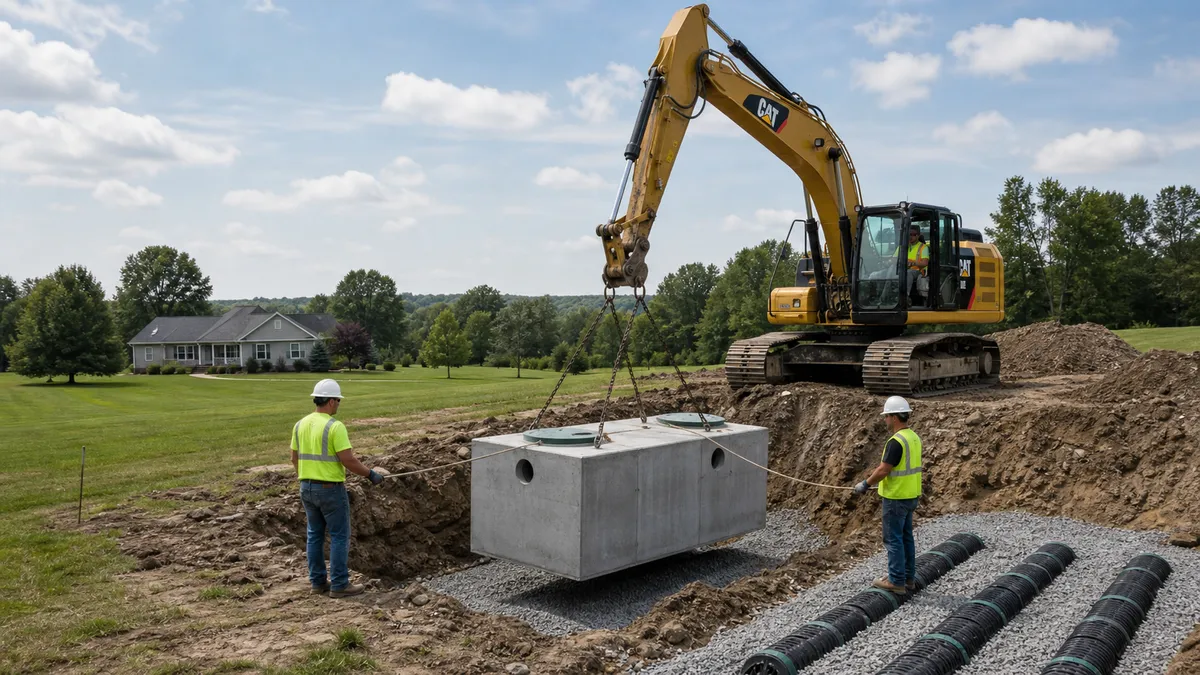
- A stamped design. A design drawing stamped by a New York licensed engineer or architect. On Backwell jobs, designs are prepared and stamped by a New York licensed Professional Engineer (PE).
- A certificate of completion. After installation, the engineer or architect of record files a certificate that the system was built per the drawings.
- No occupancy without sign off. Nobody moves in until the Codes Enforcement Officer issues a certificate of compliance or certificate of occupancy for the system.
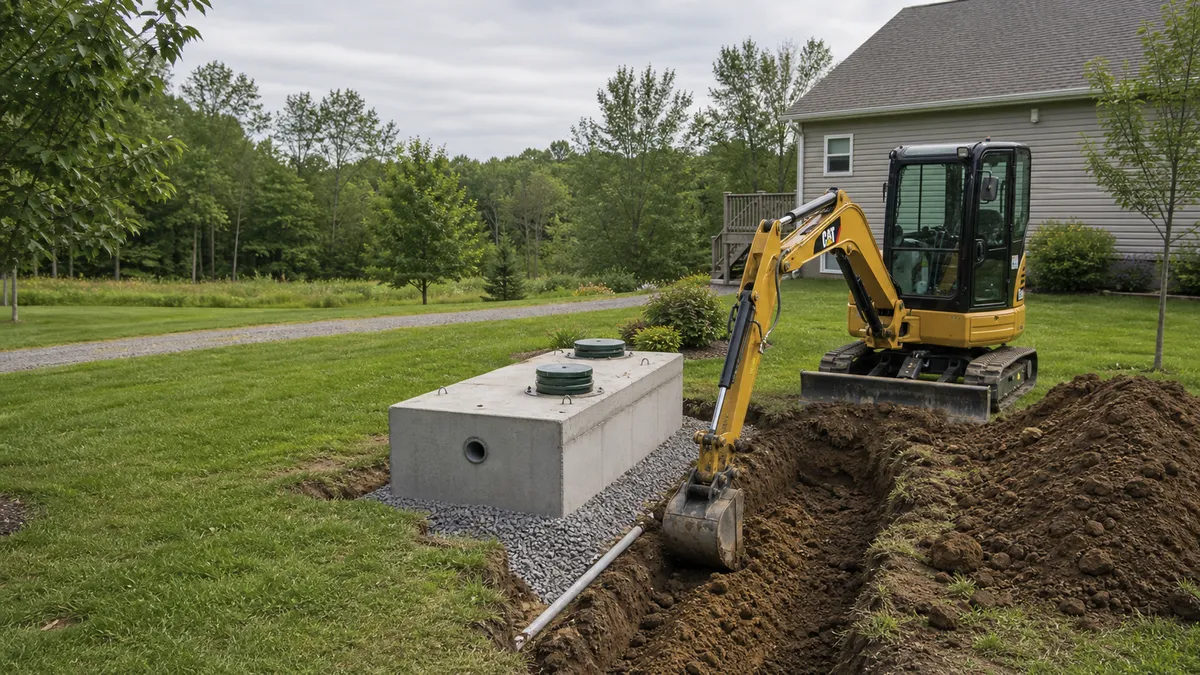
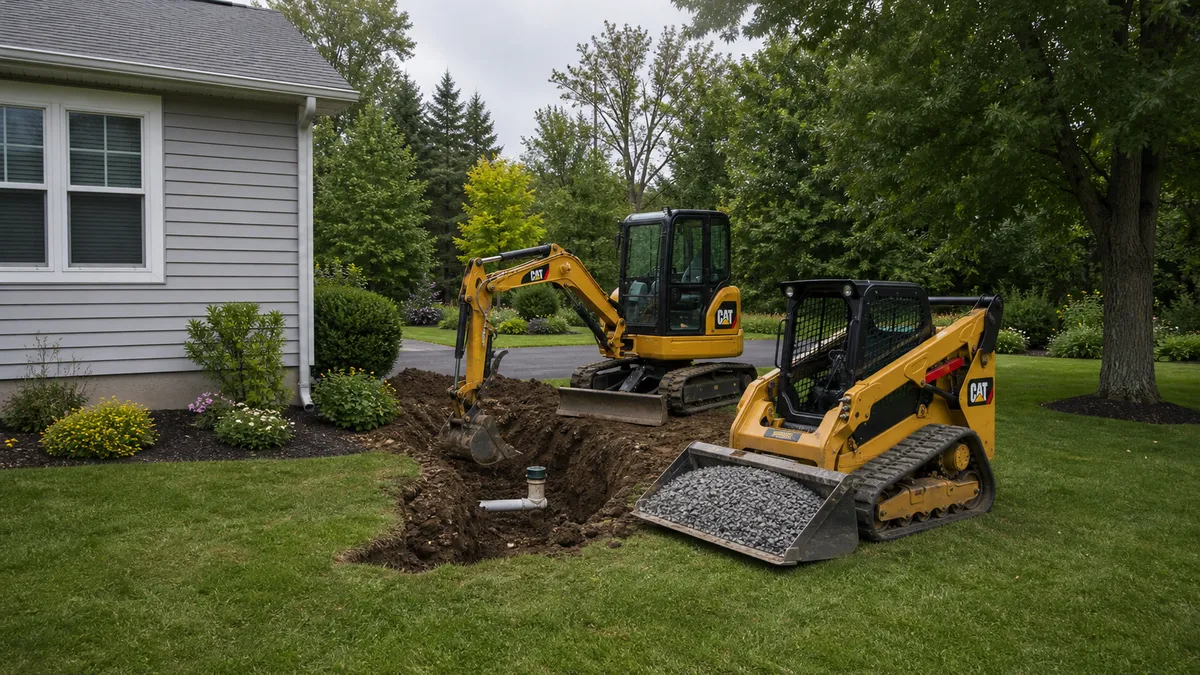
Backwell coordinates every step: tests, design, application, installation and the completion paperwork.
Repairs, alternatives and waivers
Chapter 98 has three provisions that change the path for some owners.
- Small repairs. A repair that removes or replaces less than 50 percent of an existing system does not need a licensed engineer's or architect's design and inspection. Replacing a cracked baffle or a distribution box is different from rebuilding the field.
- Alternative systems. Alternative or experimental systems must also be approved by the Oneida County Department of Environmental Health, or by NYS DOH if the county cannot provide that service.
- Waivers. Where an existing system fails and cannot meet NYS DOH standards, a waiver may be requested from the Oneida County Department of Health.
The county office is Environmental Health, Oneida County Office Building, 800 Park Ave., Utica.
Valley floor to hillside: New Hartford soils
USDA soil data for the New Hartford area shows Lima gravelly silt loam and Cazenovia silt loam as the most extensive soils, then Lansing, Aurora and Howard.
- Aurora is the one to watch. It is moderately deep, with bedrock at 20 to 40 inches, and the survey records rock at about 22 inches for Aurora silt loam on 3 to 8 percent slopes. A conventional field needs at least 4 feet of usable soil over rock under Appendix 75-A. With 22 inches, the options are a mound, which needs bedrock at least 2 feet below grade, or another design that adds separation.
- Cazenovia is moderately well drained till with bedrock deeper than 40 inches and a minimum annual water table of about 18 inches. Shallow trenches fit sites with 2 to 4 feet of usable soil.
- Lima is moderately well drained limestone till that can be dense.
- Lansing is well drained but slow inside, rated Somewhat limited for fields because of slow percolation at 24 to 72 inches.
- Howard is gravelly outwash that drains quickly.
Fees and the Sauquoit Creek grant
When a design goes to the county, the Oneida County plan review fee schedule (revised March 2022) lists $500 for an individual sewage system and $150 for an individual sewage site survey. The installation price depends on the soil and the system, so you get a written number in 1 hour after sending the address.
Sauquoit Creek runs through New Hartford, and a tributary of Upper Sauquoit Creek is on the county's priority list for septic replacement money. Properties within 250 feet can be reimbursed 50 percent of eligible costs, up to $10,000. The application needs an itemized estimate that lists engineering and design. The program ends March 31, 2027.
Problems we solve in New Hartford
Rock near the surface on the hill
Aurora ground leaves under 2 feet of soil in places. See shallow bedrock septic design.
Buying a house with an old system
Under Chapter 98, a full replacement needs a stamped design and a certificate of completion before occupancy. Budget for that before closing. See lot septic feasibility.
Adding a bedroom
Appendix 75-A sizes new work at 110 gallons per day per bedroom. See septic design for a bedroom addition.
Timeline and where to file
The New Hartford Codes Office is at 8635 Clinton Street (The Orchards), New Hartford, open weekdays 8 a.m. to 4 p.m. The septic chapter still lists an older address on New Hartford Street, so use Clinton Street. Testing is one day, and plans follow. Raised systems built with fill must settle six months unless the fill is granular sand or sandy loam compacted in lifts. Installation is days of equipment time, then the certificate of completion.
Sources
- Town of New Hartford Code Chapter 98, Individual Sewage Treatment Systems
- Town of New Hartford, Codes Office
- Oneida County Sewer District, facilities and members
- NYS DOH, 10 NYCRR Appendix 75-A
- Oneida County Health Department, plan review fee schedule
- Oneida County Health Department, permit fee schedule rev. 12/25 (address)
- Oneida County, septic system replacement funding
- USDA NRCS, Aurora series
- USDA NRCS, Cazenovia series
- USDA NRCS, Lansing series
- USDA NRCS Web Soil Survey (Oneida County, NY065)