Yard Drainage Design in Central New York
Wet yards, soggy septic areas, sump pumps that never stop, and runoff from next door. The drainage gets designed to a legal outlet, then Backwell digs and builds it.
Source. Drain. Outlet.
What kind of wet yard you have and what fixes it.
Both are trenches with perforated pipe in stone. A French drain collects water in the wet area or along a foundation. A curtain drain is placed across the slope uphill of the area you want dry, to cut off groundwater before it gets there.
Not to a sanitary sewer. Plumbing Code of New York State section 1101.3 says storm water shall not be drained into sewers intended for sewage only. On septic, Appendix 75-A says footing, cellar, roof and surface water must be kept out of the system.
To a legal outlet: daylight at a lower point on your own land, a roadside ditch or storm sewer with the road owner's permission, or an infiltration trench where the soil drains. Not piped in a mass onto a neighbor's land.
Only if the soil drains. In heavy clay or where groundwater is high, a dry well fills and stays full. Test pits show which you have.
Possibly. NYSDEC regulates freshwater wetlands of 12.4 acres or larger, dropping to 7.4 acres on January 1, 2028, with a 100 foot adjacent area, plus previously mapped wetlands. The DEC Environmental Resource Mapper is checked first.
Residential Code of New York State section R401.3 requires at least 6 inches of fall in the first 10 feet from the foundation. Where that is not possible, drains or swales must carry water away.
Plans are prepared and stamped by a New York licensed Professional Engineer (PE). Backwell coordinates the design, the town permit submittal, and the site work.
Send the address and photos of the wet area, downspouts and sump outlet through the form. Estimate in 1 hour.
Fixing a wet yard starts with knowing where the water comes from
A soggy yard in Central New York is one of three things: surface water that has nowhere to go, groundwater sitting high in the soil, or water from the house itself (downspouts, sump pump, footing drains) dumped in the wrong place. Each has a different fix. A swale or regrade handles surface water. A French drain or curtain drain handles groundwater. A proper discharge route handles the house water. Most wet yards are a mix.
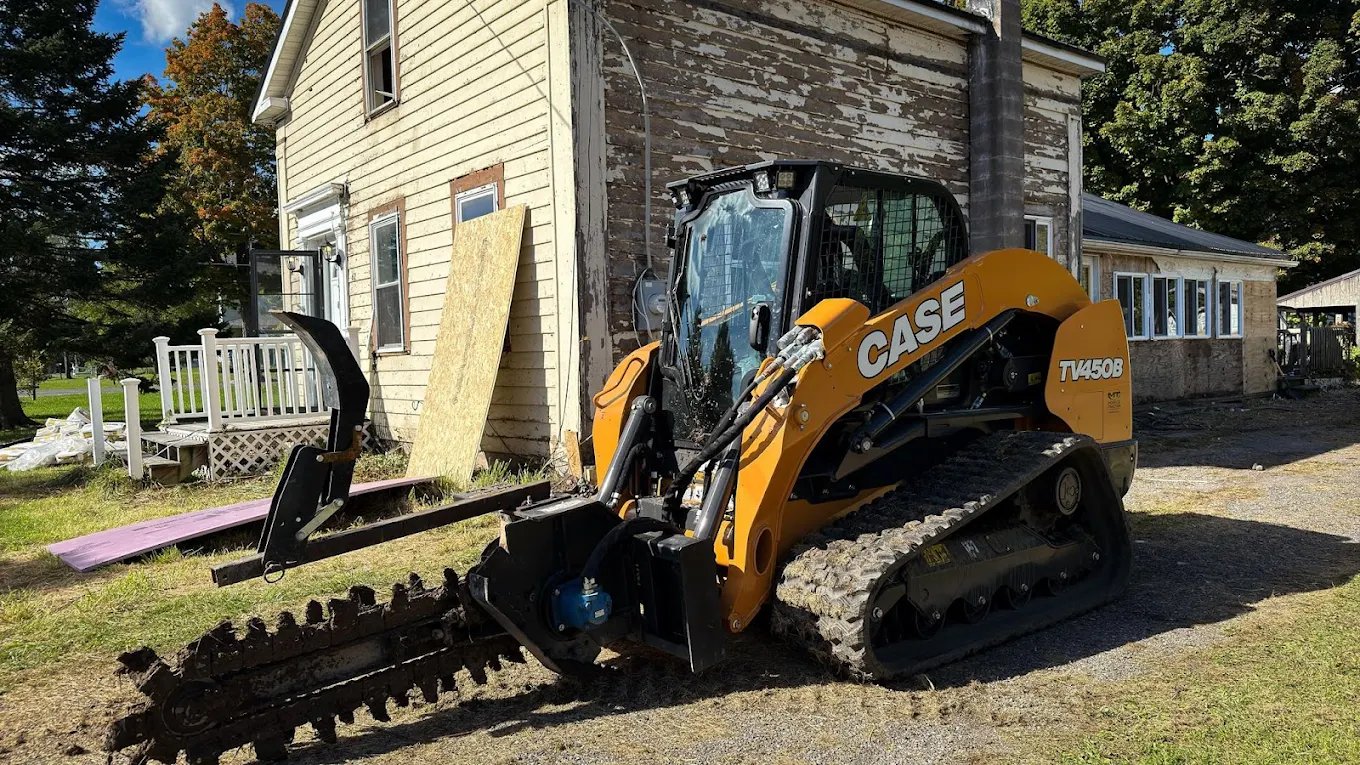
Backwell gets the yard drainage designed so each source goes to a legal outlet, then digs and builds it: swales, drains, pipe, stone, outlets and finish grade.
Plans are prepared and stamped by a New York licensed Professional Engineer (PE). Backwell coordinates the design, the town permit submittal, and the site work.
Surface water, groundwater, or house water
Surface water
Water that runs across the ground after rain or snowmelt and collects in low spots. Signs: puddles that show up during a storm and drain within a day or two, water running from the neighbor's lot or the road, mud at the bottom of a slope. Fix: grading and swales. See grading and drainage plan.
Groundwater
Water already in the soil, perched on a dense layer like clay or hardpan, or a seasonal high water table. Signs: the yard stays wet for days after rain stops, the ground is soft in spring and dries late in summer, the sump runs constantly, water seeps out of a hillside. Fix: subsurface drains (French drain or curtain drain) to an outlet.
House water
Downspouts emptying at the foundation, a sump pump discharging onto the lawn a few feet from the house, or a footing drain with a buried outlet that plugged years ago. Fix: route each to a proper outlet away from the house.
What the codes say about where the water goes
- Grade away from the house. Residential Code of New York State section R401.3 requires lots to be graded so surface water drains away from foundation walls, with at least 6 inches of fall in the first 10 feet. Where that is not possible, drains or swales have to carry the water away. Surface drainage has to go to a storm sewer or another approved point of collection that does not create a hazard.
- Foundation drains need an outlet. Section R405.1 says drains around concrete or masonry foundations that enclose space below grade must discharge by gravity or by pump into an approved drainage system.
- Not into the sanitary sewer. Plumbing Code of New York State section 1101.3: storm water shall not be drained into sewers intended for sewage only. Sump pumps, downspouts and yard drains do not connect to the house sewer.
- Not into the septic. 10 NYCRR Appendix 75-A says roof, footing, garage, cellar and surface water drainage must be excluded from the septic system.
- Sumps. The Plumbing Code (sections 1112 and 1113) covers building subdrains below the sewer level that discharge to a sump, and the sump pump, pit and discharge piping.
Onondaga County's Save the Rain suburban program funds projects that reduce stormwater impacts on overburdened and aging sanitary sewers and pump stations, and that cut inflow and infiltration into the county's sewers. A sump pump tied into a basement floor drain or sewer cleanout is the kind of connection the plumbing code rules out.
French drain vs curtain drain vs swale
Swale
A shallow, grassed channel shaped into the ground to carry surface water. Cheapest to build and easiest to maintain. It needs enough fall to an outlet, and it does nothing for groundwater.
French drain
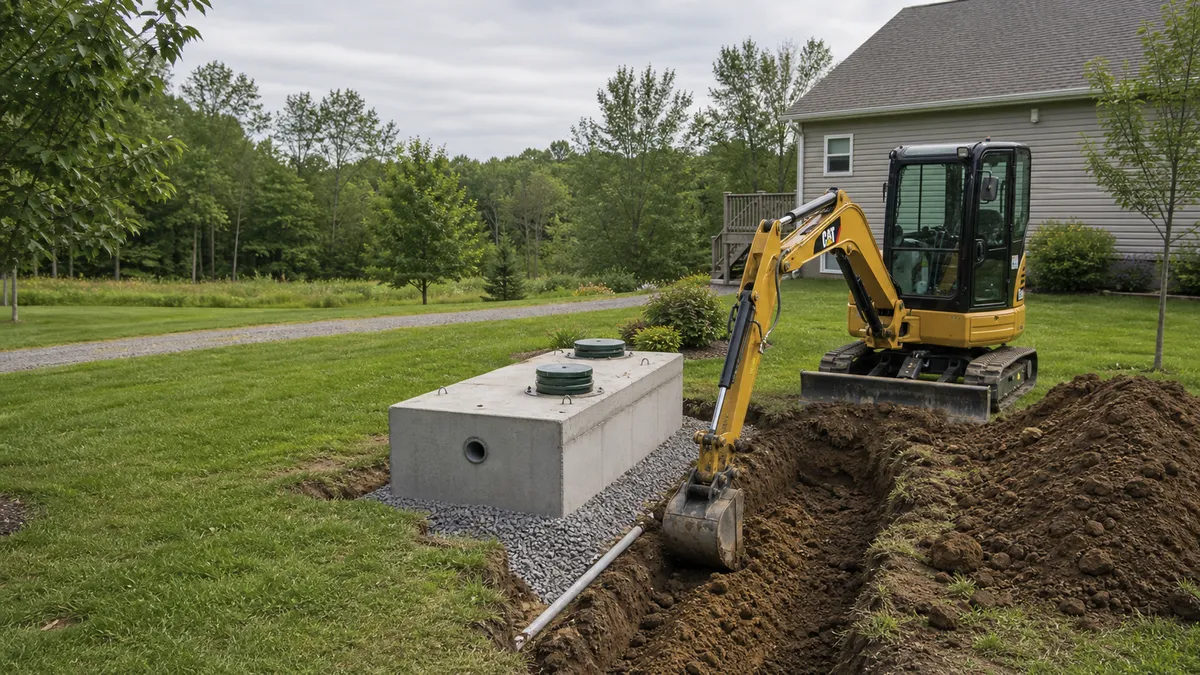
A trench with perforated pipe in clean stone, wrapped in filter fabric, that collects water from the soil and carries it to an outlet. Used in the wet area itself, or along a foundation.
Curtain drain
A French drain placed on purpose across the slope, uphill of the area you want to keep dry, to cut off groundwater moving downhill through the soil before it gets there. Appendix 75-A defines a curtain drain as a subsurface drain designed and built to control groundwater and surface water intrusion into the area of a sewage system, and uses them for that purpose on septic sites. For raised septic systems, it says curtain drains go upslope of the system and at least 20 feet from the toe of the fill. For raised systems and mounds on sloping sites, it requires a diversion ditch or curtain drain uphill to keep runoff off the system.
Dry well or infiltration trench
A stone-filled pit or trench that lets collected water soak into the ground. Only works in soil that drains. In heavy clay or where groundwater is high, it fills and stays full.
The outlet is the hard part
Every drain needs somewhere legal to go, and that is where most do-it-yourself drains fail. Options, in the order they are usually tried:
- Daylight on your own property at a lower point, with stone at the outlet so it does not erode.
- A roadside ditch or storm sewer, which belongs to the town, county or state. Work in the road right-of-way needs the road owner's permit. See driveway and culvert design.
- A stream or wetland, where the wetland rules below get checked before anything is built.
- A dry well, only where the soil drains.
What you cannot do: pipe it onto the neighbor. New York follows a reasonable use rule for surface water, summarized by the Cornell Local Roads Program in a paper posted by NYSDEC. Owners can generally grade and improve their land in good faith, but may not collect surface water with pipes, ditches or drains and cast it in a mass onto a neighbor's land. That summary is not legal advice, but it is the reason the design keeps outlets on your side of the line.
Is the wet spot a wetland?
Sometimes a wet corner of the lot is a regulated wetland, and digging drains in it is not a yard project. NYSDEC's freshwater wetlands program says wetlands of 12.4 acres or larger are eligible for state regulation, that the threshold drops to 7.4 acres on January 1, 2028, and that protected wetlands carry a 100 foot adjacent area. DEC points to its Environmental Resource Mapper to look for mapped and potentially regulated wetlands, and to its regional offices for a jurisdiction determination. DEC also notes that after an April 8, 2026 court decision it requires applications for projects affecting previously mapped freshwater wetlands. If the lot shows a mapped wetland, that gets sorted out before any drain is designed. See wet yard and wetland septic.
How it works with Backwell
- Send the address and photos. Show the wet area, the downspouts, the sump outlet and the low points. Note how long water stays after a storm. Estimate in 1 hour.
- Find the source. Surface, groundwater, or house water. Test pits show the soil and where the water sits.
- Find the outlet. Daylight point, ditch, storm sewer, or infiltration, and whose permission it needs.
- Design. Swale grades, drain locations and depths, pipe size and slope, stone and fabric, cleanouts and the outlet detail, drawn on the survey.
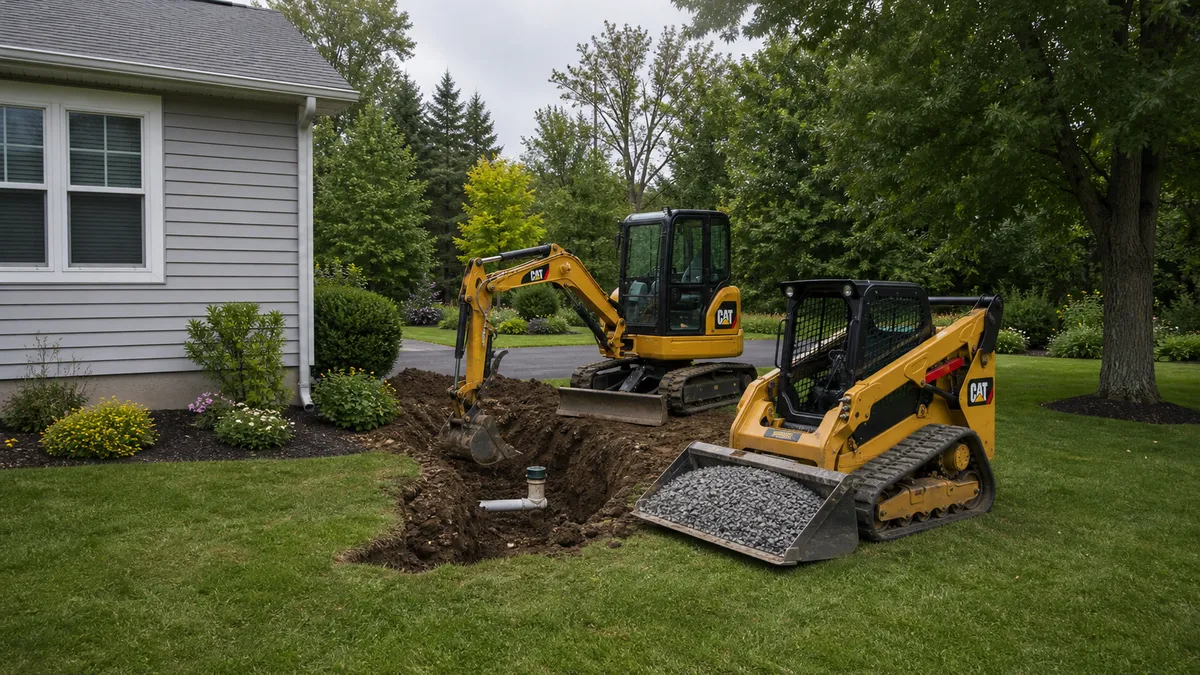
- Build. Backwell excavates the trenches, sets the pipe on grade in stone, wraps it, backfills, shapes swales, builds the outlet and restores the lawn. See grading and drainage and drain tile repair.
Common wet yard problems and the fix
Sump pump runs all spring and dumps next to the house
The water circles back into the footing drain and the pump runs again. A buried discharge line carries it to a daylight outlet or a legal storm connection far enough away that it does not return. Never into the sanitary sewer.
Backyard is a pond for days after rain
Usually a flat yard on clay with no outlet. A swale with real fall, or a French drain to a low outlet. Without an outlet, nothing works for long.
Hillside seep keeps the lawn soft
Groundwater moving downhill through the soil. A curtain drain across the slope, uphill of the wet area, cuts it off.
Water in the septic area
Wet soil over an absorption field hurts treatment and can signal a failing system. Surface water and footing drains have to be kept away from the system under Appendix 75-A, and on sloping sites a curtain drain or diversion ditch uphill is the usual fix. See high water table septic and septic engineer.
Neighbor's runoff floods your side yard
Grade your side to carry the water around the house to an outlet. An interceptor swale along the line usually does it. See grading and drainage plan.
Downspouts are buried and plugged
Old clay or corrugated downspout lines fill with roots and silt. Replace them with smooth pipe on grade to a working outlet, with cleanouts.
Timeline
Yard drainage on an existing lot is design, then build. Permits come in when the outlet is in a road right-of-way (the road owner's permit), when the work is in a regulated wetland or its adjacent area (DEC), or when the work disturbs one acre or more (DEC stormwater permit). Drains are best built when the ground is not frozen or saturated. The written estimate lists the schedule for your job.
Sources
Rules change. These are the documents this page is based on, checked October 2026.
- Residential Code of New York State 2025, Chapter 4 Foundations (R401.3, R404.4, R405.1), UpCodes
- Plumbing Code of New York State 2025, Chapter 11 Storm Drainage (1101.3, 1112, 1113), UpCodes
- NYS Department of Health, 10 NYCRR Appendix 75-A, wastewater treatment standards for individual household systems
- Cornell Local Roads Program, Drainage Law and Drainage Situations and Problems in New York State (2015, hosted by NYSDEC)
- NYSDEC, Freshwater Wetlands Program
- Onondaga County Save the Rain, suburban green infrastructure program