Septic Engineer in Chittenango, NY
Soil tests and PE stamped septic plans for homes outside the Chittenango village sewer, from Chittenango Springs to Bolivar and the slopes along Chittenango Creek.
Soils. Permits. Design.
Where the village sewer reaches, and what a septic design needs outside it.
The village is, through its own 1.3 MGD plant. The plant also serves the Poolsbrooke district in Sullivan, Megnin Farms in Manlius and the Oneida Indian Nation district. Homes outside these areas use septic.
Village parcels go to Village of Chittenango Codes and Permits at 222 Genesee Street. Town parcels go to Town of Sullivan Building and Codes at 7507 Lakeport Road. Alternative designs also go to Madison County Public Health.
Not in the floodplain. Wayland soil has water at the surface to 6 inches down, and Appendix 75-A rules out ground below the 10 year flood level. Fields must also be 100 feet from a stream.
It can be. Palmyra and Phelps outwash have high conductivity, so effluent can pass through before it is treated. Pressure distribution spreads the dose across the field.
No. Chittenango Springs, south of the village, and Bolivar, to the northeast, are in the Town of Sullivan. Septic permits there go through the town office at 7507 Lakeport Road.
Backwell coordinates the job. Designs are prepared and stamped by a New York licensed Professional Engineer (PE).
Yes. Send the address and you get a written price in 1 hour.
Chittenango septic design: the answer up front
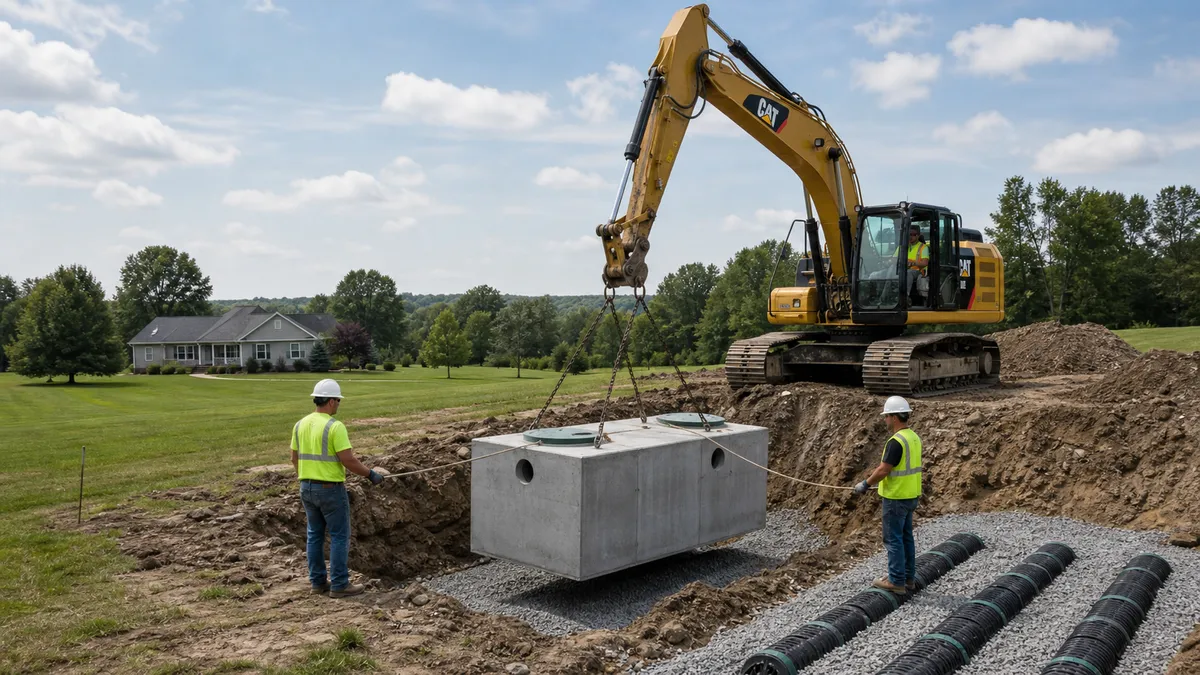
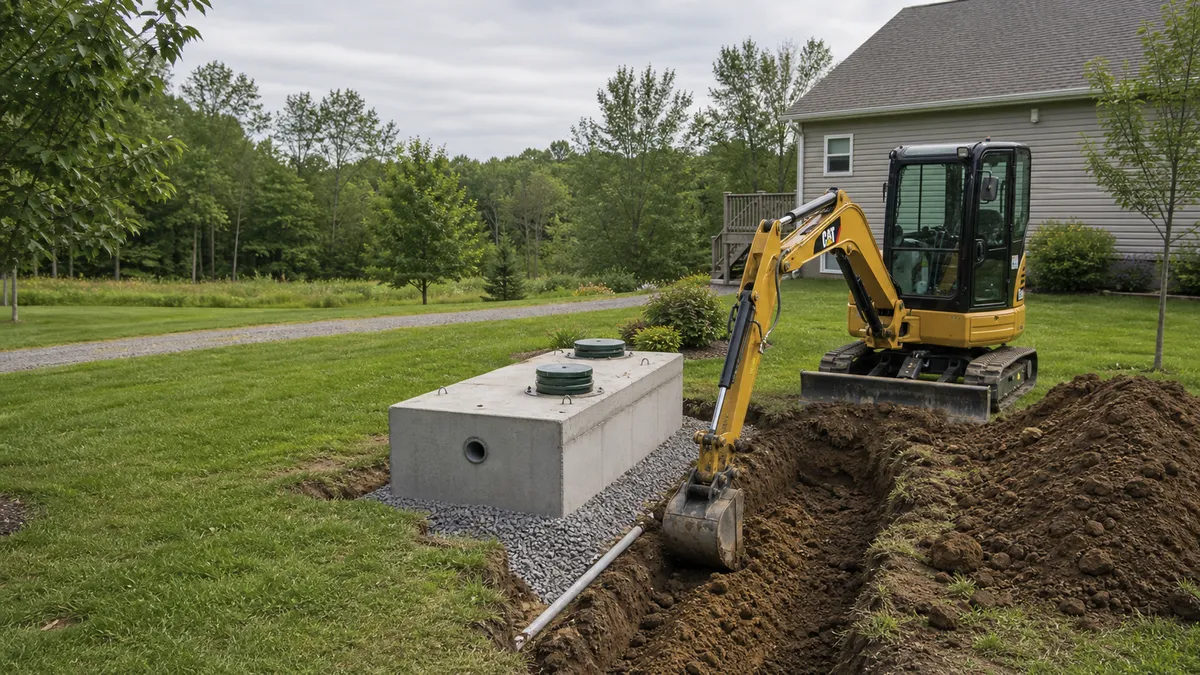
Inside the Village of Chittenango you are almost certainly on sewer. Just outside it, in the Town of Sullivan around Chittenango Springs and Bolivar, many homes are on private septic. When those systems need replacing, or a new house goes up, the job starts with a deep hole and a stamped plan. Backwell coordinates the tests, design, permit and installation. Designs are prepared and stamped by a New York licensed Professional Engineer (PE).
Who the Chittenango plant serves
The village owns its wastewater plant, which a contractor operates. It is rated at 1.3 million gallons a day, and a $1.4 million clarifier refurbishment is underway as the last phase of the 2006 plant upgrade. Besides the village, three outside users send flow to it: the Poolsbrooke Sewer District in the Town of Sullivan, the Megnin Farms Sewer District in the Town of Manlius in Onondaga County, and the Oneida Indian Nation Improvement District.
Chittenango is the only village in the Town of Sullivan and the seat of town government. Lots outside the village and outside those districts are where septic design comes in.
Two very different soils on either side of the village
USDA soil data for a sample area around the village ranks Honeoye, Palmyra, Phelps, Cazenovia, Wayland, Lairdsville and Teel at the top. About 68 percent of the area is rated Very limited for absorption fields and 18 percent Somewhat limited, a better split than the lake plain to the north.
- Palmyra is well to somewhat excessively drained outwash with high or very high conductivity in the gravel and sand below. It percs fast. The design question is treatment, not drainage: effluent can move through gravel faster than the soil can clean it.
- Phelps is moderately well drained outwash, also with high or very high conductivity in its sand and gravel.
- Wayland is the Chittenango Creek floodplain soil: poorly and very poorly drained alluvium with the water table at the surface to 6 inches down and occasional ponding. No conventional field goes there, and Appendix 75-A rules out ground below the 10 year flood level.
- Honeoye on the upland is well drained limy till with bedrock deeper than 60 inches, usually good septic ground.
A good Chittenango design reads which of these the field area actually sits on. Two lots a few hundred feet apart can need different systems. See conventional septic design and pressure distribution design.
How it works
- Send the address. Estimate in 1 hour.
- Test pit. At least 6 feet deep, read for mottling, gravel and groundwater, which must sit at least 2 feet below the trench bottom.
- Perc tests. At least two, at trench depth.
- Design. 110 gallons per day per bedroom. Fields 100 feet from wells and 100 feet from Chittenango Creek, other streams and wetlands.
- Permit. Village of Chittenango Codes and Permits at the Municipal Building, 222 Genesee Street, for village parcels. Town of Sullivan Building and Codes at 7507 Lakeport Road for town parcels. Alternative designs also go to Madison County Public Health in Wampsville.
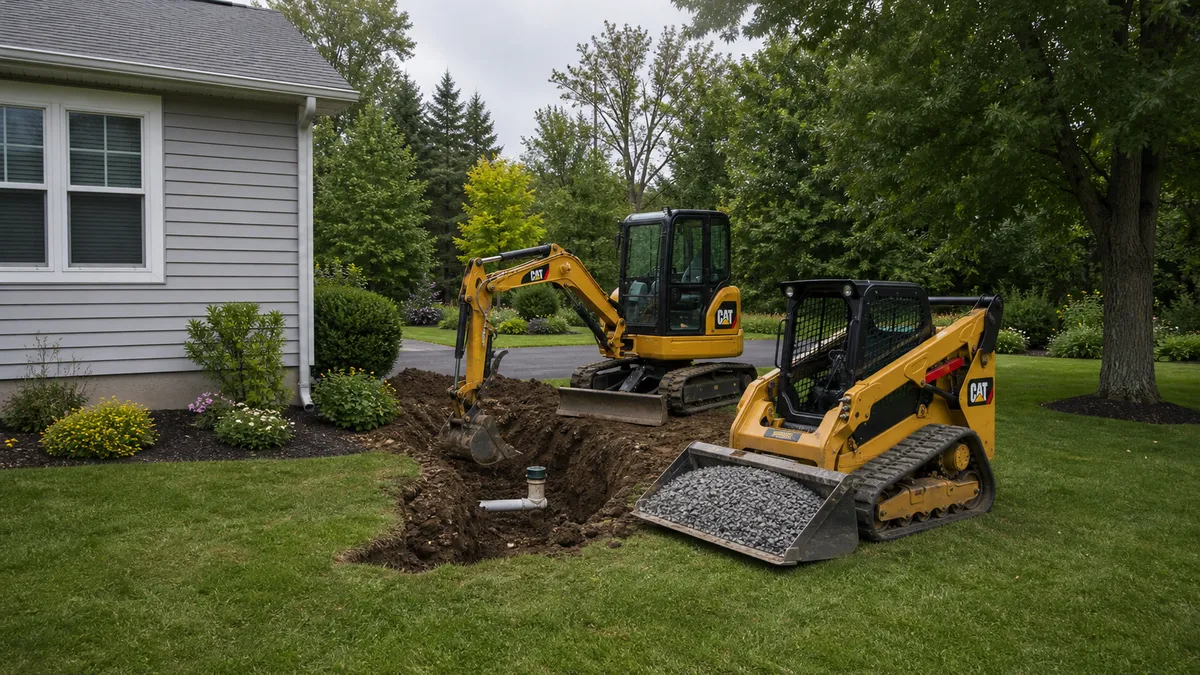
- Install. Backwell installs to the approved plan.
What it costs
Madison County charges $125 per lot to review and inspect an alternative system, with at least 2 sets of the engineer's plans, filed at least 30 days before construction. Beyond that, cost depends on the soil. We price from your address and any test results. Estimate in 1 hour.
The county septic replacement grant is limited to Cazenovia Lake, its tributaries and upper Canastota Creek, so Chittenango Creek frontage below the lake is not covered under the current list.
Chittenango problems and fixes
Lot near the creek
Wayland floodplain soil and the 100 foot stream distance can leave little room. The field goes on the higher terrace. See high water table design.
Gravel that percs too fast
On Palmyra and Phelps outwash, pressure dosing spreads the effluent so the soil can treat it.
Bedroom addition
Adding bedrooms raises the design flow by 110 gallons per day each and can push tank size up. See septic design for a bedroom addition.
Chittenango Springs, Bolivar and the town around the village
Chittenango Springs lies south of the village and Bolivar to the northeast. Both are in the Town of Sullivan, so the permit runs through the town office at 7507 Lakeport Road, not the village. South of the village the ground climbs toward the Honeoye and Lairdsville uplands, where the question is depth to rock (Lairdsville bedrock sits at 20 to 40 inches). North and along the creek, the question is water. The test pit tells us which side of that line your field is on.
When the county gets involved
Madison County Public Health, Environmental Health Division, at 138 N Court Street, Building 5, Wampsville, reviews and approves alternative household systems under Part 75.5 of the state rules. Its application asks for the system type, the reason for an alternate design, the soil description, depth to water table and the date it was found, bedrooms, occupants, lot size, topography and water supply. The county inspects the site and tracks the installation inspection. Its page also links the state's specific waiver form for residential systems that cannot meet a standard.
Timeline
Testing takes a day. County review of alternative systems needs 30 days before construction. Installation takes days.
Sources
- Village of Chittenango, sewer department
- Village of Chittenango, codes and permits
- Town of Sullivan, building permits
- Sullivan, New York (Wikipedia)
- NYS DOH, 10 NYCRR Appendix 75-A
- Madison County Public Health, water and septic individual systems
- Madison County, alternative household wastewater treatment system application
- Madison County, Septic System Replacement Fund
- USDA NRCS Web Soil Survey and Soil Data Access (Madison County, NY053)
- USDA NRCS, Palmyra series
- USDA NRCS, Phelps series
- USDA NRCS, Wayland series
- USDA NRCS, Honeoye series