Septic Engineer in Cortland, NY
The city is sewered. The valley around it sits on a sole source aquifer, and Cortland County requires an engineer's design for every new and replacement septic system. We handle the tests, the stamped plan and the install.
Fees. Process. Answers.
Septic design around the City of Cortland, on and off the aquifer.
Yes, for all new construction and all replacement systems, full or leach field only. Any New York licensed professional engineer may be used. A tank replacement only does not need an engineer.
$200 for a sewage disposal permit, $65 for a tank replacement or repair in kind, and $65 for a permit renewal, per the fee schedule effective April 1, 2026.
On primary aquifer lots with soils faster than 10 minutes per inch, the county requires a cut and fill system with slower fill, and the separation policy calls for 200 feet between the well and the septic system.
Cortland County Health Department, Environmental Health Division, County Office Building, 60 Central Avenue, Cortland, NY 13045, phone (607) 753-5035.
Twelve months from issuance under Article XV of the county sanitary code, with 12 month renewals.
The county's minimum lot size rules list 105,000 square feet for a lot with no public water or sewer, 30,000 with one, and 15,000 with both. Waivers are possible in some cases.
Send the address and bedrooms through the form. Estimate in 1 hour.
Cortland in two sentences
The City of Cortland's Leroy R. Summerson treatment plant on Port Watson Street has a design flow of 9 million gallons per day and discharges to the Tioughnioga River, and the state notes it sits within a sole source aquifer area. Outside the sewered city, in Cortlandville and the surrounding towns, Cortland County requires an engineer's design for all new construction and all replacement systems, full or leach field only.
Designs are prepared and stamped by a New York licensed Professional Engineer (PE). Backwell coordinates the design, the Cortland County Health Department submittal, and the install.
The aquifer rules that change the design
The Cortland-Homer-Preble aquifer system is designated a Primary Aquifer by NYSDEC and a Sole Source Aquifer by the US EPA, per USGS. Cortland County writes that into its septic rules:
- Cut and fill on fast soils. The county's minimum lot size rules say lots in primary aquifer areas with soils faster than 10 minutes per inch must have a cut and fill system, with fill having a percolation rate slower than 10 minutes per inch.
- 200 feet to wells. The county's separation policy says 200 feet from well to septic system is needed in aquifer areas, usually where perc rates are under 10 minutes per inch.
- Shallow wells. When aquifer water enters a well less than 50 feet below grade, well separation distances go up 50 percent. The county suggests at least 50 feet of casing and grouting to at least 20 feet to avoid that.
- Fill systems. Fill must have an in-place tested perc rate of 10 to 20 minutes per inch and be approved by the department before construction.
- 100 percent replacement area. Every system keeps room for a complete second field.
Valley and hillside soils
The valley floor is outwash: Howard gravelly loam, which the USDA describes as very deep and well to somewhat excessively drained, and Chenango gravelly loam, very deep and well to somewhat excessively drained, on outwash plains, kames and terraces. That fast ground is exactly what triggers the aquifer rules above. The hillsides are different: Mardin channery silt loam is moderately well drained with a dense fragipan starting 14 to 26 inches down and a seasonal water table typically 14 to 24 inches below the surface, and Lordstown is moderately deep to siltstone and sandstone bedrock. Volusia soils, somewhat poorly drained with a fragipan at 10 to 22 inches, sit in the flatter upland spots.
So a valley lot in Cortlandville often means a cut and fill system built for the aquifer, and a hillside lot often means a raised system, because the fragipan or the rock leaves one to two feet of usable soil. Appendix 75-A sets the raised system limits: high groundwater at least a foot below the surface and slopes of 15 percent or less.
How it works in Cortland County
- Address and plan. Bedrooms, new or replacement. Estimate in 1 hour.
- Soil tests. The county says the engineer conducts the soil tests, percolation and deep hole.
- PE stamped design. With the site plan of proposed sanitary facilities and separation distances to adjacent facilities, which the county rules require on every application.
- Application and fee. To the Environmental Health Division, County Office Building, 60 Central Avenue, Cortland, with the $200 sewage disposal permit fee. Checks go to the Cortland County Treasurer.
- County approval and permit. The county reviews and approves the design and issues the installation permit.
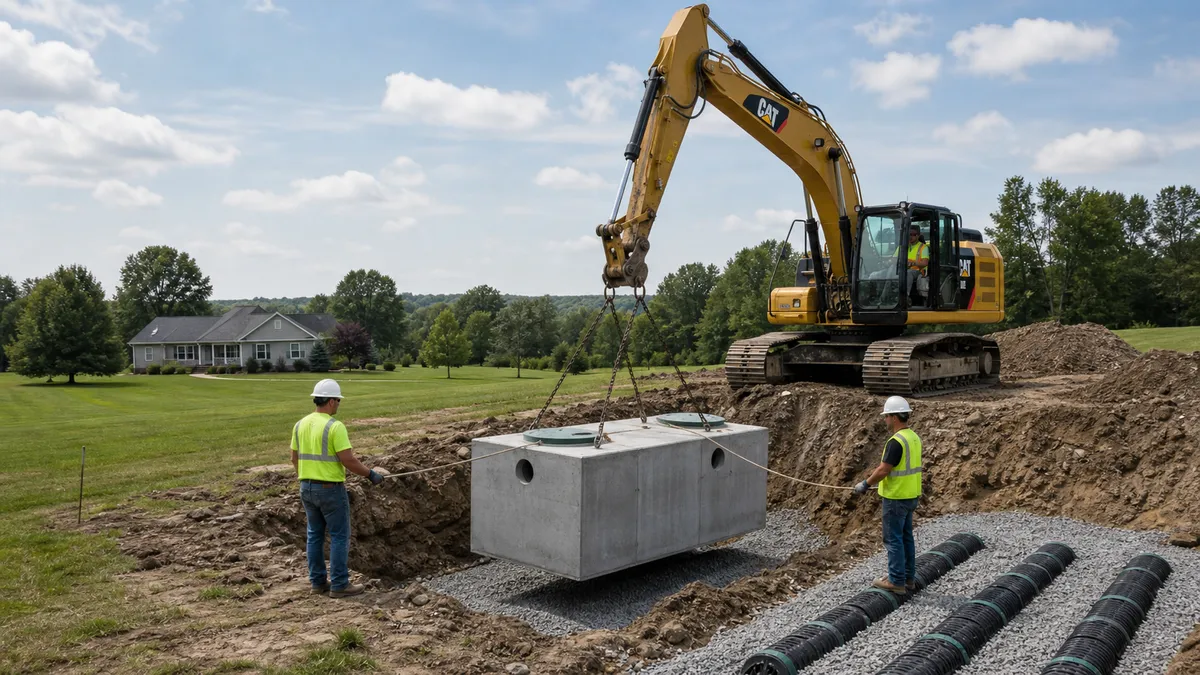
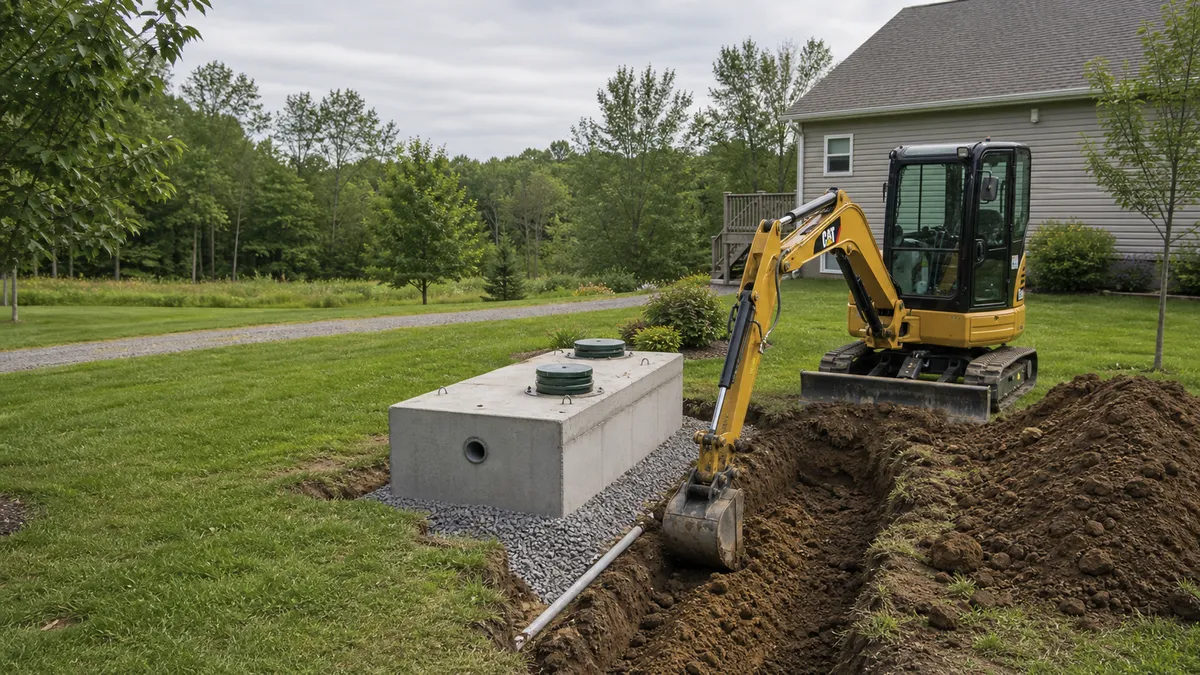
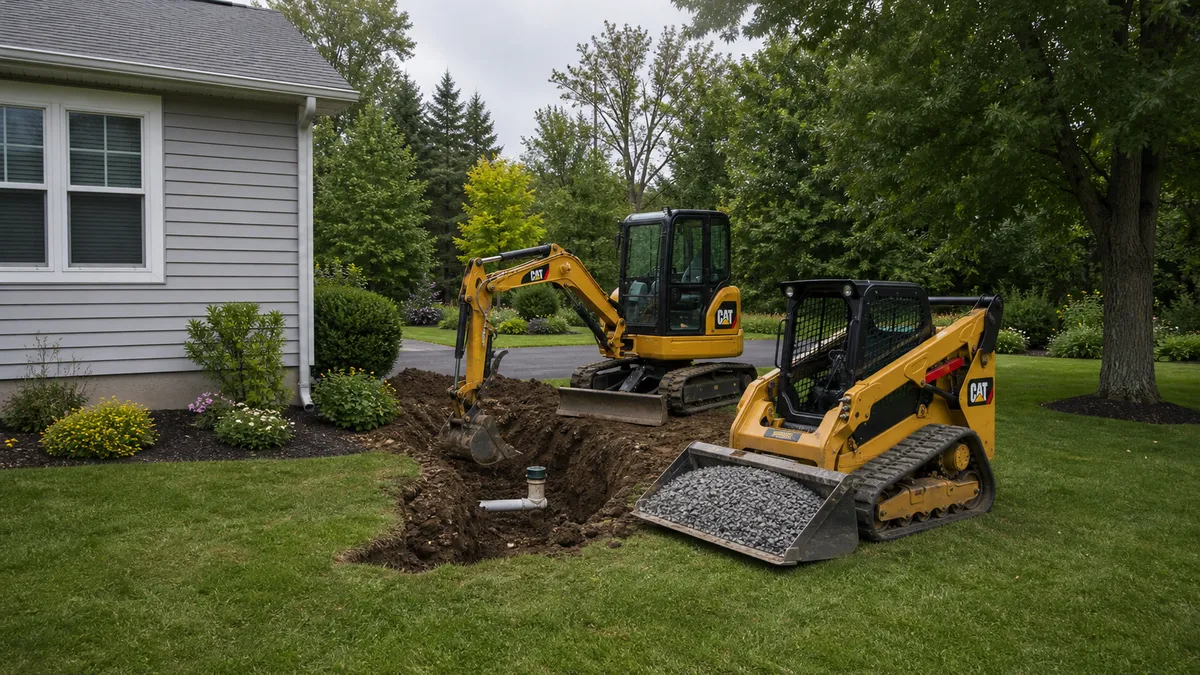
- Install, inspection, completion. The engineer inspects the installation, final tank and distribution box measurements go to the county, and the county issues the final completion.
What the county checks
- Lot size. The county's rules list 105,000 square feet (about 2.4 acres) for lots with no public water and sewer, 30,000 with one of the two, 15,000 with both.
- Groundwater at least two feet below the bottom of the absorption trenches, and rock at least two feet below.
- Fill inspected and allowed to settle 45 days before trenching, per the county application.
- Usable area, soil and groundwater conditions; the county can refuse a permit where they fall short.
Cortland problems and fixes
Gravel that perks at 3 minutes per inch
On the aquifer, that triggers a cut and fill system. The fast soil is replaced in the field zone with fill slower than 10 minutes per inch, and the well distance goes to 200 feet.
Tank collapsed
An engineer is not needed for a tank replacement only. The county reviews the application, inspects the new tank and sketches it for your file. The fee is $65.
Hillside fragipan at 16 inches
A raised system in fill, dosed or pressure distributed, with the fill settled before trenching.
Timeline
Testing and design, county review and permit, then the install and county completion. A permit is valid 12 months after it is issued, and renewals add 12 months for $65. Fill systems add the 45 day settling period.
Sources
- NYS DOH, 10 NYCRR Appendix 75-A, Wastewater Treatment Standards, Residential Onsite Systems
- Cortland County Health Department, Sewage Systems
- Cortland County Environmental Health Fee Schedule, effective April 1, 2026
- Cortland County Sanitary Code, April 1, 2026 (Article XV and Minimum Lot Size rules)
- Cortland County Health Department, Revised On-Site Well and Septic Separation Distances
- Cortland County Health Department, Application for Subsurface Sewage Treatment Permit
- USGS Fact Sheet 2003-0054, Cortland-Homer-Preble aquifer system (Primary Aquifer and Sole Source Aquifer)
- NYSDEC Environmental Notice Bulletin, City of Cortland Leroy R. Summerson WWTF
- USDA NRCS Official Soil Series Description, Howard
- USDA NRCS Official Soil Series Description, Chenango
- USDA NRCS Official Soil Series Description, Mardin
- USDA NRCS Official Soil Series Description, Lordstown
- USDA NRCS Official Soil Series Description, Volusia
Rules and fees as published by each office on the date this page was written. They can change; the design is checked against the current versions at submittal.
More around Cortland.
Nearby towns
Septic engineer in HomerSeptic engineer in McGrawSeptic engineer in MarathonSeptic engineer in MoraviaDesign and site problems
Raised bed septic designConventional septic designShallow bedrockSmall lot setbacksSteep slope septicTell us about the Cortland property.
Send the address. Estimate in 1 hour.
Free Written Estimate
Estimate in 1 hour.