Septic Engineer and Raised Bed Septic in Moravia, NY
Moravia sits at the head of Owasco Lake. The village is sewered. The hills around it are not, and the soils change fast. We run the tests, coordinate the PE stamped plan and build it.
Fees. Process. Answers.
Septic design in the Town of Moravia and the hills above the Owasco Inlet.
The Village of Moravia has its own wastewater treatment plant on Aurora Street that discharges to the Owasco Lake Inlet. Homes outside the village are generally on private septic systems that Cayuga County regulates.
Yes. Moravia is in the Owasco Lake watershed, and Cayuga County's repair application says repairs and modifications there must be designed by a Licensed Professional Engineer or Registered Architect.
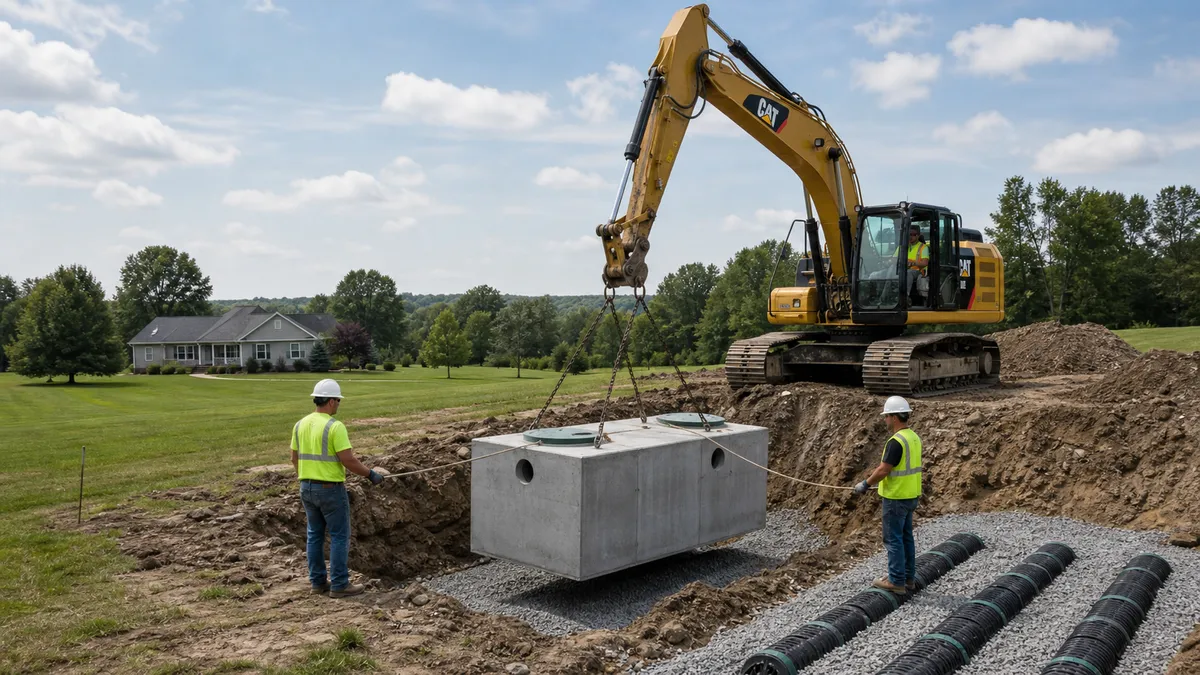
When the deep hole shows only one to two feet of usable soil over rock or tight soil, or the seasonal water is too high for trenches, and the slope is 15 percent or less, Appendix 75-A allows a raised system built in fill.
A $150 review fee for a new system plan, and $100 or $150 for a repair depending on system type, per the 2025 applications.
The Town of Moravia Code Enforcement Officer, after the Cayuga County Health Department sends its memo that the septic plan has been accepted.
The county does not inspect before backfill. The design professional verifies construction and files a certificate of construction letter.
Use the form below with the address and bedroom count. Estimate in 1 hour.
What Moravia owners need to know first
The Village of Moravia treats its own sewage. Its plant at 83 Aurora Street holds a state discharge permit for 0.6 million gallons per day to the Owasco Lake Inlet, and it is one of only two treatment plants in the Owasco Lake watershed. Outside the village, homes on the valley floor, the hillside roads and the plateau toward Locke and Sempronius are on septic, and they are all inside the Owasco Lake watershed.
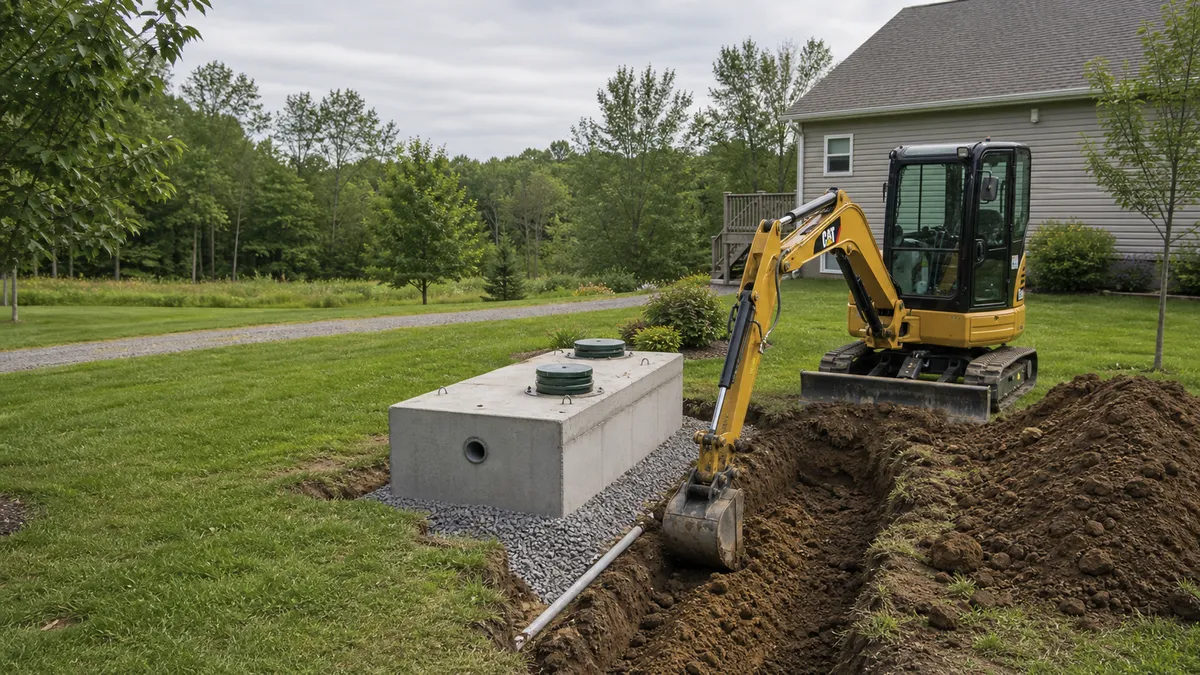
That location matters. Cayuga County requires a Licensed Professional Engineer or Registered Architect to prepare plans for any septic repair or modification in the Owasco Lake watershed, not only new systems. Designs are prepared and stamped by a New York licensed Professional Engineer (PE). Backwell coordinates the design, the county submittal and the install.
Valley floor, valley walls, plateau
Moravia's soils run in bands. The outwash terraces along the inlet carry Palmyra gravelly loam, which the USDA describes as well to somewhat excessively drained, formed in loamy material over stratified gravel and sand. That is good ground for a conventional system, but percolation can run too fast: Appendix 75-A says soil faster than one minute per inch is not suitable for a subsurface absorption system unless it is blended with a less permeable soil.
The low ground at the lake head is wetter. Wayland silt loam forms in recent alluvium on flood plains and is poorly to very poorly drained, with the water table near the surface for much of the year. Canandaigua silty clay loam is also mapped in the low positions. These lots often fail the 75-A conditions for a raised system or mound because the high water must stay at least a foot below the surface. Flood level is a second filter: land below the 10 year flood level is unacceptable for onsite systems.
Up the valley walls and onto the plateau, Honeoye and Lansing silt loams are well drained till soils, but the slopes get steep. Past 15 percent, 75-A rules out the site, and a mound tops out at 12 percent. Shale can come up near the surface on the plateau edge, which is where a raised bed septic system in imported fill becomes the standard answer: 75-A allows a raised system where there is one to two feet of usable original soil over rock.
How it works in Moravia
- Tell us the lot. Address, bedrooms and whether it is new, a replacement or an addition. Estimate in 1 hour.
- Testing. At least two perc tests and a deep hole at least six feet deep in or next to the proposed field, done by the design professional before any plan is drawn, as the county instructions require.
- Stamped plan. Conventional, shallow trench, raised, mound or pressure distribution, picked from what the hole shows.
- County review. Three copies, application and the $150 fee go to the Cayuga County Health Department, 8 Dill Street, Auburn. Staff check the property for wetlands, watercourses and wells.
- Building permit. When the plan is accepted, the county sends a memo to the Town of Moravia Code Enforcement Officer.
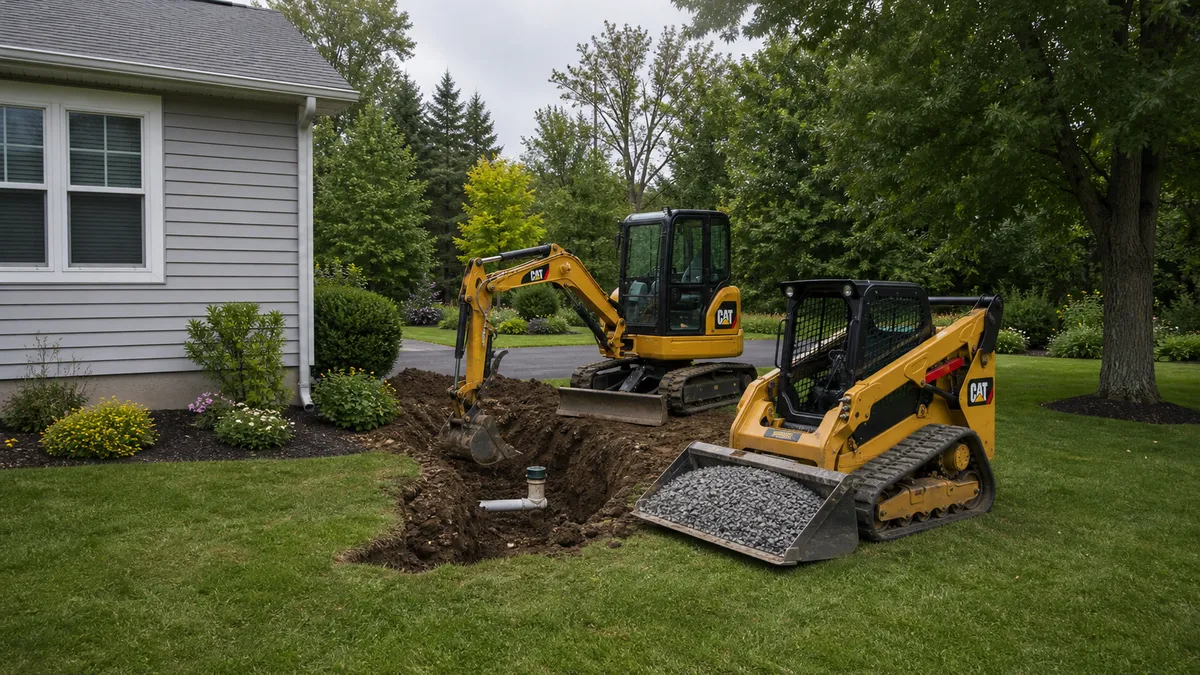
- Build and certify. The PE checks the install before backfill and files the certificate of construction letter with the county.
What the county looks at on a Moravia plan
- Distance from the absorption field to the inlet, every tributary and any wetland: 100 feet under Table 2 of Appendix 75-A, and 100 feet to the high-water mark of Owasco Lake and all waters in the 2023 proposed watershed rules.
- Fill and taper. A raised system's fill edge tapers no steeper than one vertical to three horizontal with at least a 20 foot taper, and separation distances are measured from the toe of the fill.
- Dosing. Raised systems use siphon, pump dosing or pressure distribution, and a mound requires a pressure network.
- A diversion ditch on the uphill side of fill on sloped sites, so runoff stays out of the system.
Moravia problems and fixes
Shale at 20 inches
Too shallow for a conventional field, which needs four feet of usable soil. A raised system adds fill rated 5 to 30 minutes per inch to keep two feet between the trench bottom and the rock.
Gravel that perks too fast
On the inlet terraces, a perc faster than one minute per inch means blending or importing a slower soil so the effluent is treated before it reaches groundwater.
Hillside farmhouse with a failing field
A replacement plan is required, and in this watershed it must be drawn by a design professional. The county may issue an interim permit when an existing lot cannot meet every new-system standard.
Timeline
Allow time for testing in workable weather, then up to 4 to 6 weeks for the county approval to construct, per the county application. Fill systems need the fill tested at the borrow pit and after placement and settling, and the slower rate is used for design, so raised systems take longer on site than a trench system.
Sources
- NYS DOH, 10 NYCRR Appendix 75-A, Wastewater Treatment Standards, Residential Onsite Systems
- Cayuga County Health Department, Septic System Installation and Inspection
- Cayuga County Health Department, Instructions to Obtain Septic System Plan Approval for New Construction
- Cayuga County Health Department, Application to Install a New Septic System (rev. 1/7/2025)
- Cayuga County Health Department, Application to Modify/Replace an Existing Septic System (rev. 1/7/2025)
- Owasco Lake Watershed Rules and Regulations, Updates 2023 (State Recommendations dated 9/15/23)
- NYSDEC Environmental Notice Bulletin, Village of Moravia STP permit renewal (2025)
- USDA NRCS Official Soil Series Description, Palmyra
- USDA NRCS Official Soil Series Description, Wayland
- USDA NRCS Official Soil Series Description, Canandaigua
- USDA NRCS Official Soil Series Description, Honeoye
- USDA NRCS Official Soil Series Description, Lansing
Rules and fees as published by each office on the date this page was written. They can change; the design is checked against the current versions at submittal.
More around Moravia.
Nearby towns
Septic engineer in OwascoSeptic engineer in AuburnSeptic engineer in Union SpringsSeptic engineer in HomerDesign and site problems
Raised bed septic designMound septic designShallow bedrockSteep slope septicPressure distribution designTell us about the Moravia property.
Send the address. Estimate in 1 hour.
Free Written Estimate
Estimate in 1 hour.