Septic Engineer in Palmyra, NY
Palmyra gravelly loam is named for this town, and it drains fast. The creek and canal flats do not. We run the tests, coordinate the PE stamped plan and build it.
Fees. Process. Answers.
Septic design in the Village and Town of Palmyra.
Palmyra gravelly loam is well to somewhat excessively drained outwash, which often supports a conventional field. If the perc is faster than one minute per inch, Appendix 75-A requires blending with a less permeable soil.
Yes. The village code requires a written permit signed by the Village Engineer or another village designee before a private sewage disposal system is built, and only where public sewer is not available.
The Western Wayne County Regional WWTP, operated by the Wayne County Water and Sewer Authority, is at 613 East Main Street, Palmyra.
100 feet under Appendix 75-A, or 200 feet when the system is uphill and in the direct path of drainage to the well.
Wayland and Canandaigua soils on the flats are poorly drained, often with water at or near the surface. Those lots usually need the system placed on higher ground.
The NYSDOH Geneva District Office, (315) 789-3030, per the 2026 directory.
Send the address through the form. Estimate in 1 hour.
Palmyra in two sentences
The Western Wayne County Regional wastewater plant, run by the Wayne County Water and Sewer Authority, sits at 613 East Main Street in Palmyra, and the Village of Palmyra's code requires a written permit signed by the Village Engineer or a village designee before anyone builds a private sewage system where sewer is not available. Outside the sewered areas, Palmyra homes run on septic built to 10 NYCRR Appendix 75-A, and the design starts with the soil the town is named for.
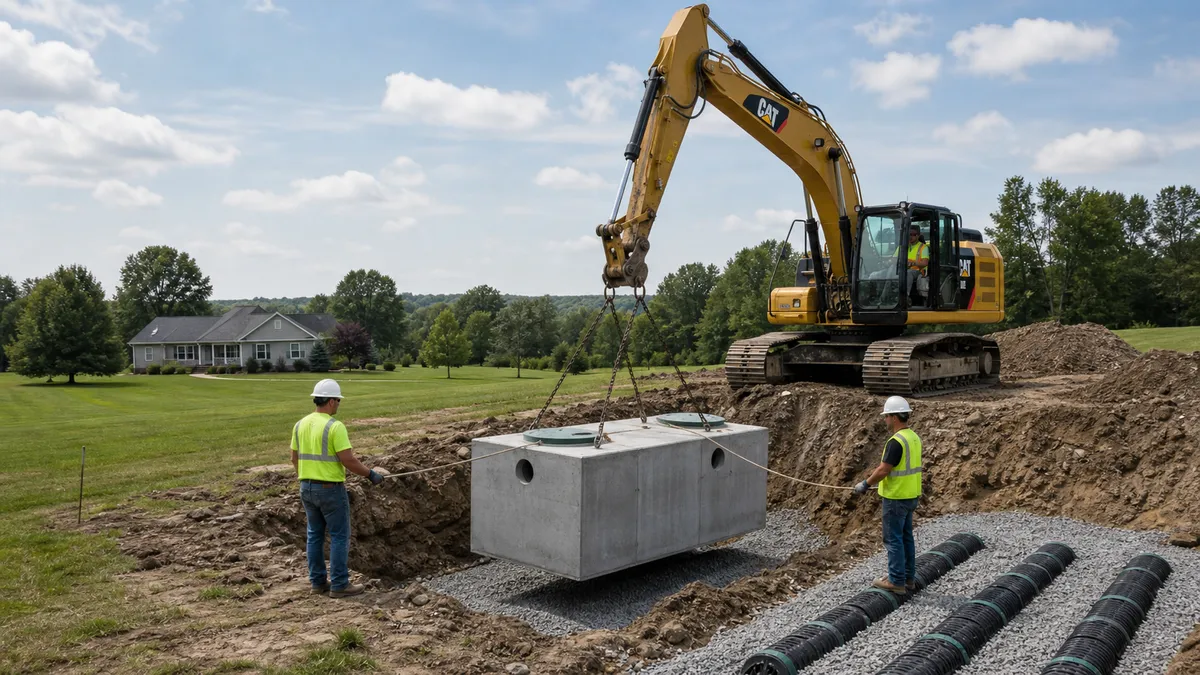
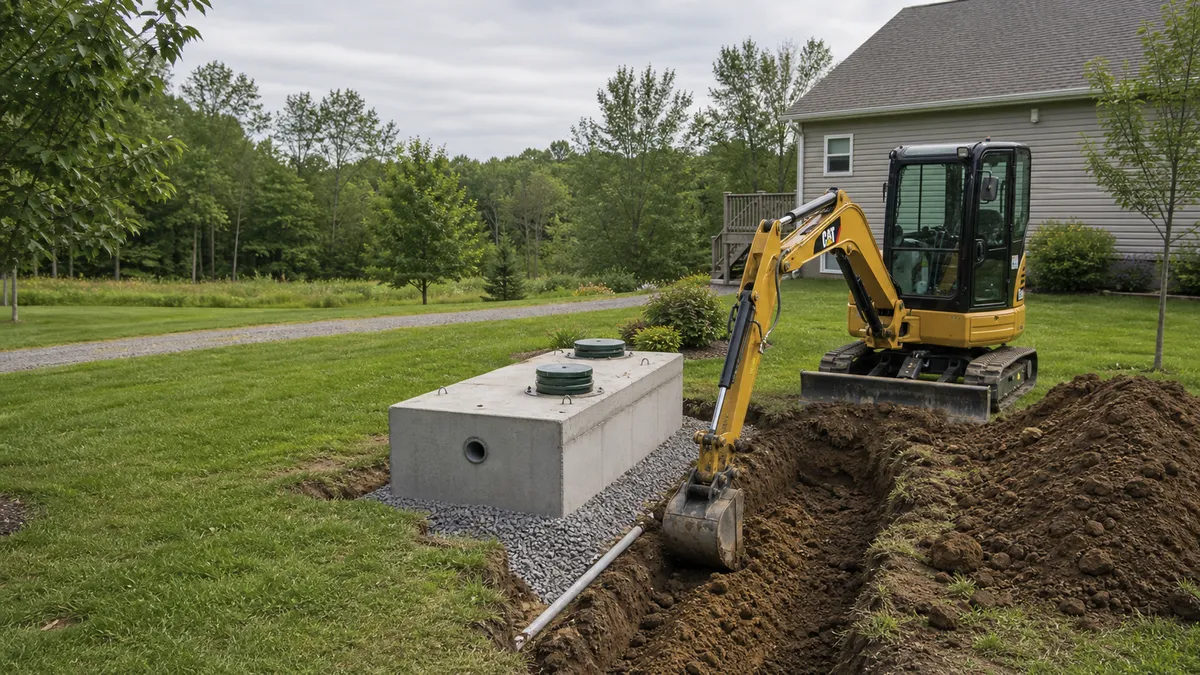
Designs are prepared and stamped by a New York licensed Professional Engineer (PE). Backwell coordinates the design, the village or town submittal, and the install.
Palmyra gravelly loam
The USDA describes the Palmyra series as very deep, well drained to somewhat excessively drained soil formed in glacial outwash: loamy material over calcareous, stratified gravel and sand. It is some of the best septic ground in Wayne County, with one catch. Appendix 75-A says soils with percolation faster than one minute per inch are not suitable for subsurface absorption unless the site is blended with a less permeable soil, and fast gravel can also matter for nearby wells. The state well separation table is built on 100 feet from field to well, and 200 feet where the system is uphill and in the direct path of drainage to the well.
The other side of town is the Ganargua Creek and canal flats, mapped as Canandaigua silty clay loam and Wayland silt loam. The USDA lists Wayland as poorly and very poorly drained alluvium in low and slackwater areas of flood plains, with an apparent water table at or near the surface. Those lots usually cannot meet the depth to water any subsurface system needs, and the design moves to higher ground. Honeoye silt loam drumlins in between are well drained till, a good fit for conventional trenches.
How it works in Palmyra
- Address and plan. Village or town, bedrooms, new or replacement. Estimate in 1 hour.
- Sewer check. In the village, a private system is only used where a public sewer is not available.
- Perc tests and deep hole. On gravel, the perc rate decides whether blending is needed. On the flats, the hole decides whether a system fits at all.
- PE stamped plan. With the plans and specifications the permit form asks for.
- Permit. In the village, the written permit signed by the Village Engineer or designee. In the town, the building permit through the code office.
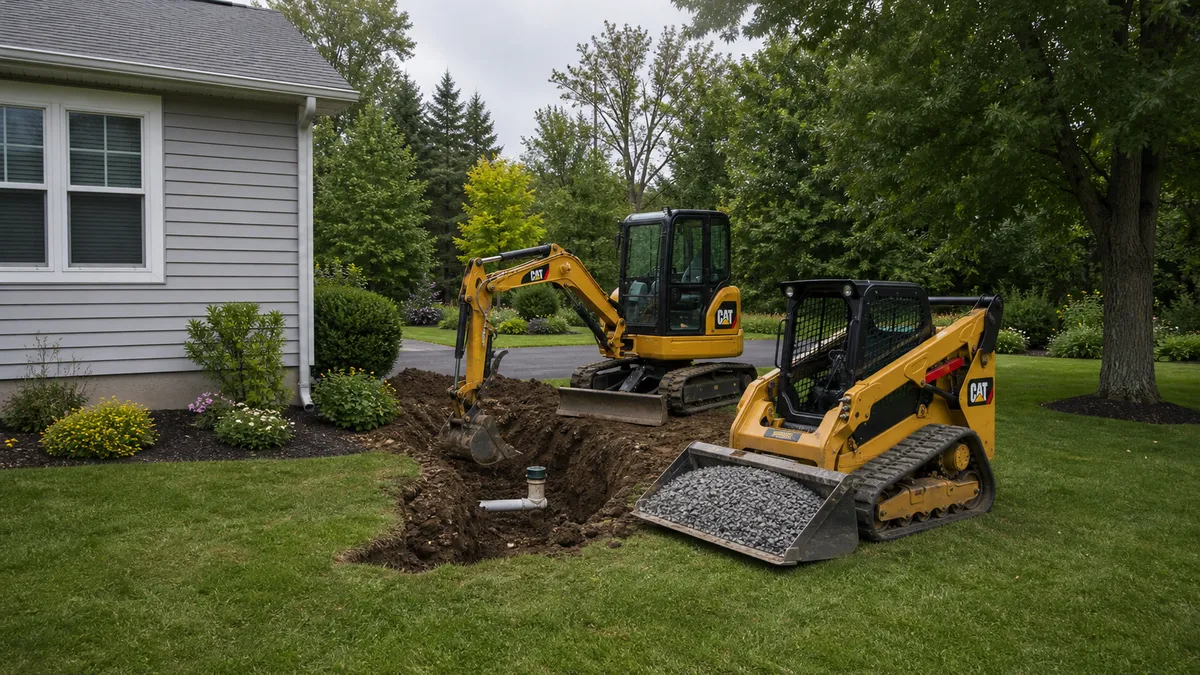
- Install and inspection. Built to the stamped plan and Appendix 75-A.
What gets checked
- Perc rate inside the 1 to 60 minutes per inch range of the 75-A trench table.
- At least four feet of usable soil for a conventional field, two feet below the trench bottom.
- Field 100 feet from wells and Ganargua Creek, 200 feet from a downgradient well in the drainage path.
- Ground above the 10 year flood level.
Palmyra problems and fixes
Perc faster than one minute per inch
Blend the trench zone with a slower soil to bring it into range, then dose the field so it loads evenly.
Neighbor's well downhill
On fast gravel, the plan holds 200 feet if the field is uphill and in the drainage path to the well.
Creek flat lot
Wayland soils with water at the surface leave no room for a subsurface system. The field goes to the highest mineral soil on the parcel.
Timeline
Testing and design, the village or town permit, then the install. The 2026 NYSDOH directory lists the Geneva District Office, (315) 789-3030, as the state environmental health office for Wayne County.
Sources
- NYS DOH, 10 NYCRR Appendix 75-A, Wastewater Treatment Standards, Residential Onsite Systems
- NYS DOH Center for Environmental Health Directory 2026 (district offices and county health departments)
- Village of Palmyra Code, Chapter 147, Article III, Private Sewage Disposal
- NYSDEC Environmental Notice Bulletin, Western Wayne Co Regional WWTP, Palmyra
- USDA NRCS Official Soil Series Description, Palmyra
- USDA NRCS Official Soil Series Description, Wayland
- USDA NRCS Official Soil Series Description, Canandaigua
- USDA NRCS Official Soil Series Description, Honeoye
Rules and fees as published by each office on the date this page was written. They can change; the design is checked against the current versions at submittal.
More around Palmyra.
Nearby towns
Septic engineer in MacedonSeptic engineer in NewarkSeptic engineer in WilliamsonSeptic engineer in LyonsDesign and site problems
Conventional septic designPressure distribution designWet yard or wetlandFailed perc testHigh water tableTell us about the Palmyra property.
Send the address. Estimate in 1 hour.
Free Written Estimate
Estimate in 1 hour.