Septic Engineer in Lee, NY
Perc tests, deep hole tests and PE stamped septic plans for Lee Center, West Lee, Stokes and the Delta Lake shore. Designed for some of the tightest fragipan soils in Oneida County.
Soils. Permits. Design.
County review fees and the Delta Reservoir grant, plus what a Lee septic design includes.
The Town of Lee website shows water districts but no sewer district that we could find. Homes in Lee Center, West Lee, Stokes and around Lake Delta use private septic systems.
Pinckney, Camroden and Marcy soils cover more than a third of the town and all have a fragipan, as shallow as 12 to 18 inches in Marcy soil. Appendix 75-A wants 4 feet of usable soil for a conventional field.
On Alton gravel, which covers about 16 percent of the town, often yes. Alton is well drained outwash with bedrock deeper than 60 inches. The deep hole confirms it.
Delta Reservoir and a tributary of Delta Reservoir are on Oneida County's priority list. Properties within 250 feet can get 50 percent of eligible repair or replacement costs back, up to $10,000, through March 31, 2027.
Backwell coordinates the design and the install. Designs are prepared and stamped by a New York licensed Professional Engineer.
Through the Town of Lee Codes Enforcement Officer at Town Hall, 5808 Stokes Lee Center Road, Lee Center. Hours are Wednesday 6 to 8 PM and Saturday 10 AM to noon.
Yes. Send the address and you get a written price for design and installation in 1 hour.
Septic design in Lee: what to know first
The Town of Lee website lists a water department and water districts, but we found no sewer district. Houses in Lee Center, Lee, West Lee, Stokes Corner, Hawkins Corner, West Branch, Point Rock, Elmer Hill and around Lake Delta all treat their own wastewater. A new house, a failed field or a bedroom addition means a septic design.
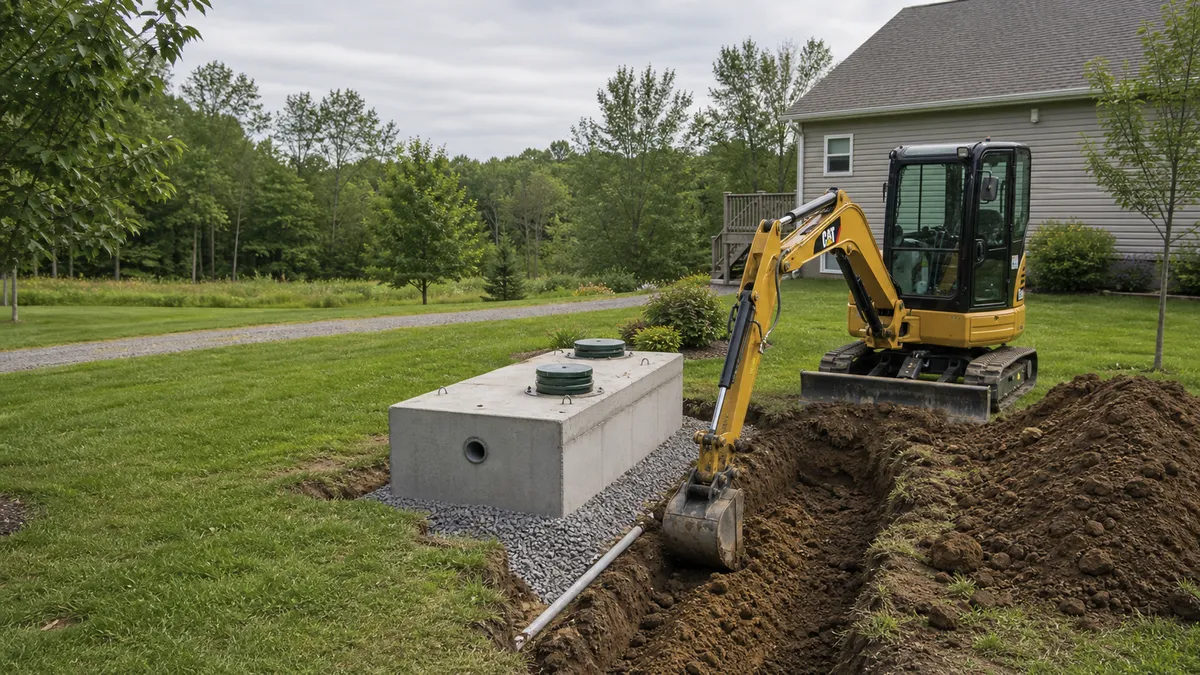
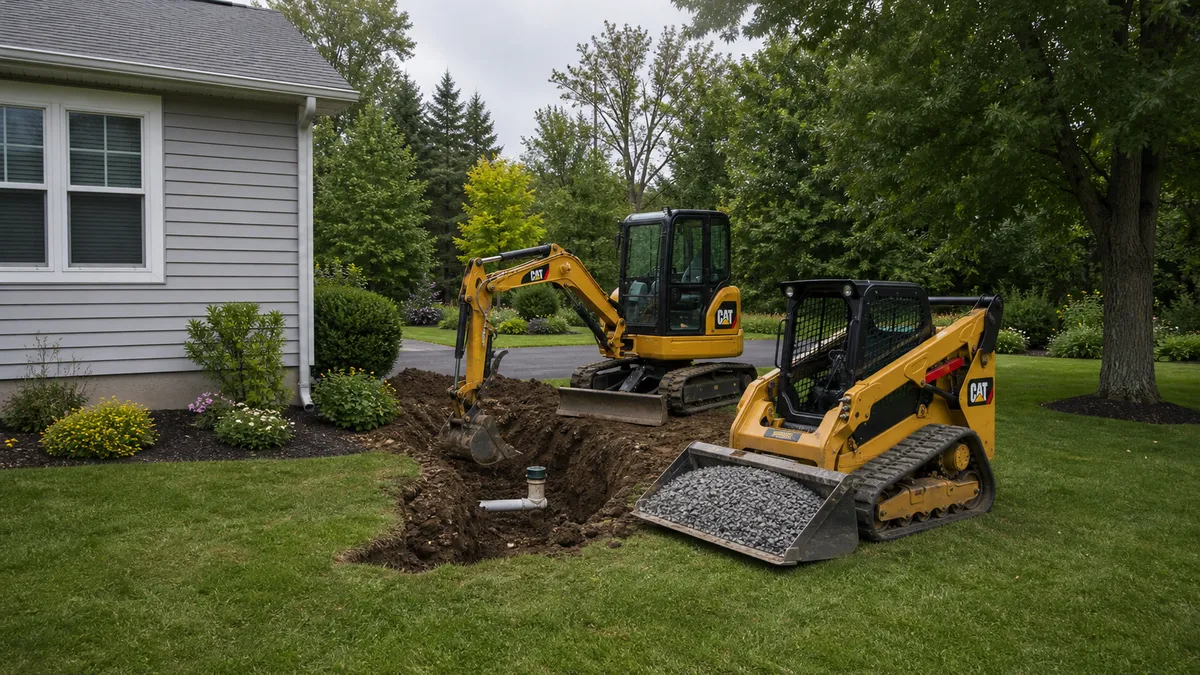
Backwell handles the tests, plan, permit and installation as one job. Designs are prepared and stamped by a New York licensed Professional Engineer (PE). The answer on most Lee lots depends on one thing the deep hole shows: how far down the fragipan sits.
Lee soils: gravel ridges and hardpan till
USDA soil data for the Town of Lee shows Pinckney soils on about 19 percent of the town, Alton about 16 percent, Camroden about 11 percent, Marcy about 7 percent, and Venango and Bice about 5 percent each.
Marcy, the hardest case
The Marcy series was typified right here in Oneida County. It is poorly drained till with a fragipan at only 12 to 18 inches, and water moves through that pan very slowly. With a foot or so of usable soil, a conventional trench is out, and the design is usually a mound or a raised system on imported fill.
Camroden and Pinckney
Camroden has its fragipan at 14 to 21 inches, and county data shows wet soil from about 16 inches. Pinckney has its fragipan at 20 to 30 inches and is slow or very slow to drain. Together with Marcy, these cover more than a third of the town.
Alton, the good ground
Alton soils are gravelly outwash and beach deposits, well to somewhat excessively drained, with bedrock deeper than 60 inches. On Alton gravel a conventional trench often works, as long as the setbacks fit.
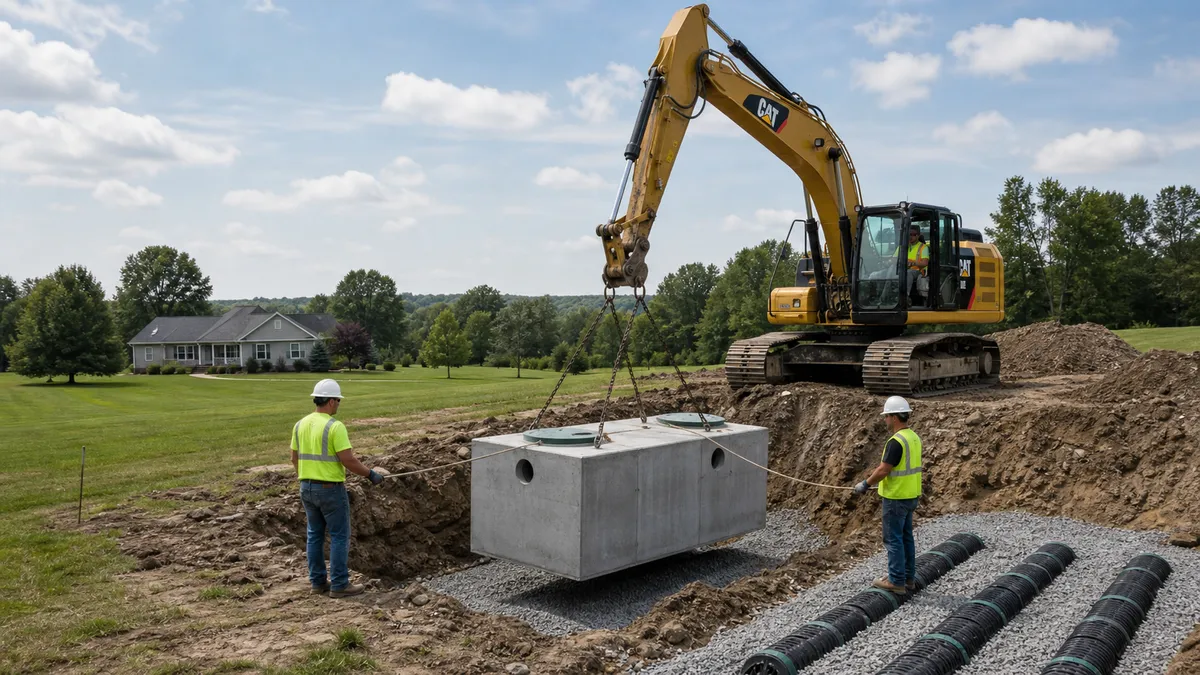
Appendix 75-A requires at least 4 feet of usable soil above rock, unsuitable soil and high groundwater for a conventional field. Shallow trenches are for 2 to 4 feet. Below 2 feet, the field has to be built up.
Mound or raised system on Lee till
Two state designs cover the shallow ground.
- A raised system needs 1 to 2 feet of original soil percing faster than 60 minutes per inch, high groundwater at least 1 foot below grade, slopes of 15 percent or less, and at least 2 feet of fill percing at 5 to 30 minutes per inch.
- A mound needs high groundwater at least 1 foot below grade and bedrock at least 2 feet down, accepts native soil percing faster than 120 minutes per inch, and uses at least 24 inches of approved sand over the stone.
On Marcy soil, the slower native perc a mound accepts often decides it. See mound septic design and clay soil septic design.
Lake Delta lots
Delta Reservoir sits partly in the southeast corner of Lee. It was created in 1911 as a feeder for the Barge Canal by flooding the old Village of Delta. Shore lots there face the same squeeze as any lake lot: Appendix 75-A keeps fields, raised systems and mounds 100 feet from a lake, stream or wetland and 100 feet from a well. A narrow shore parcel often pushes the field to the road side with a pump.
Delta Reservoir and a tributary of Delta Reservoir are on Oneida County's septic grant priority list. A property within 250 feet can be reimbursed 50 percent of eligible repair or replacement costs, up to $10,000. The application needs an itemized estimate that breaks out engineering and design, labor and materials. The program ends March 31, 2027 or when the money runs out. See lakefront septic design.
Steps from test pit to finished field
- Send the address and bedrooms. Estimate in 1 hour.
- Deep hole. At least one hole at least 6 feet deep in or next to the field.
- Perc tests. At least two per system.
- Design. 110 gallons per day per bedroom; tank of 1,000 gallons for 1 to 3 bedrooms, 1,250 for 4, 1,500 for 5.
- Permit. Through the Town of Lee Codes Enforcement Officer at Town Hall, 5808 Stokes Lee Center Road, Lee Center. Office hours are Wednesday 6 to 8 PM and Saturday 10 AM to noon.
- County review for alternative systems. The Oneida County Health Department, 800 Park Ave., Utica, approves alternative technologies for individual homes.
- Install and inspect.
Costs
When the county reviews a system, its fee schedule (revised March 2022) lists $500 for an individual sewage system and $150 for a site survey. A mound on Marcy soil and a trench on Alton gravel are very different builds, so we price each lot in writing. Send the address for a price in 1 hour.
Timeline
One day of testing, then design. A raised system on fill that must settle adds six months through one freeze and thaw, unless the fill is granular sand or sandy loam compacted in lifts. Wet spring testing on Lee till shows the real high water, and planning around the code office's evening and Saturday hours keeps the permit moving.
Sources
- Town of Lee, codes enforcement
- Town of Lee, home page (water districts)
- Lee, New York (Delta Reservoir history)
- NYS DOH, 10 NYCRR Appendix 75-A
- Oneida County Health Department, plan review fee schedule (rev. 3/2022)
- Oneida County Health Department, permit fee schedule (rev. 12/25)
- Oneida County, septic system replacement funding
- Oneida County, public water supply and sewage program
- USDA NRCS, Marcy series
- USDA NRCS, Camroden series
- USDA NRCS, Pinckney series
- USDA NRCS, Alton series
- USDA NRCS Web Soil Survey (Oneida County, NY065)