Septic Engineer in Rome, NY
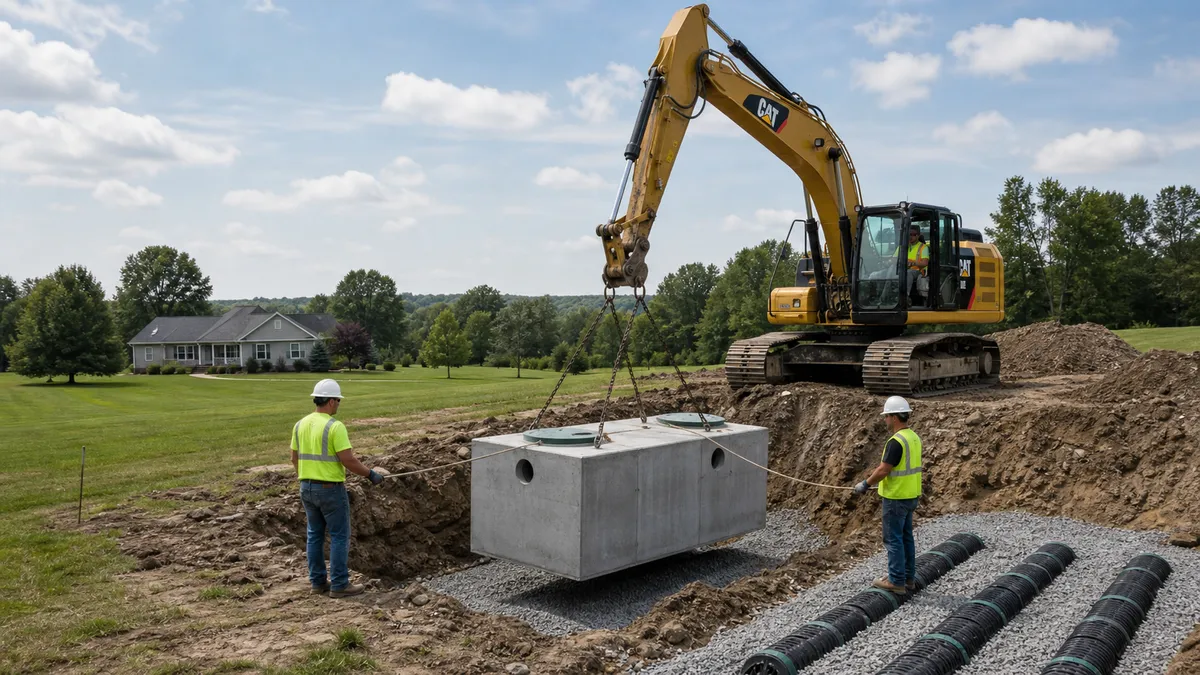
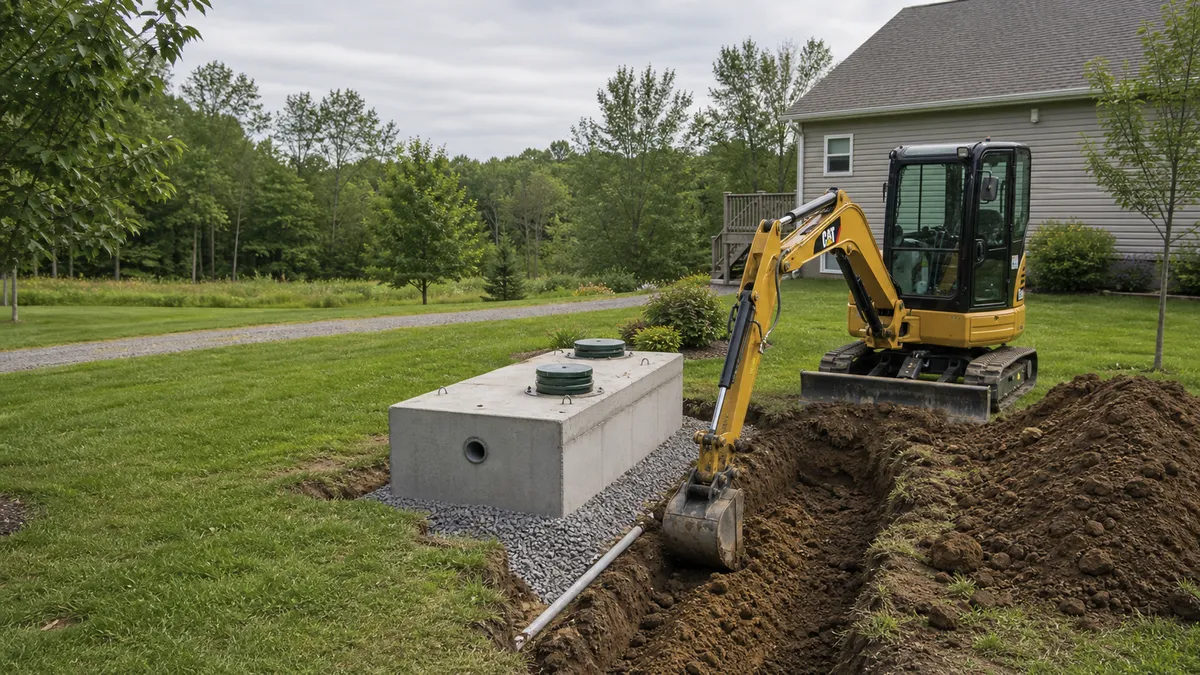
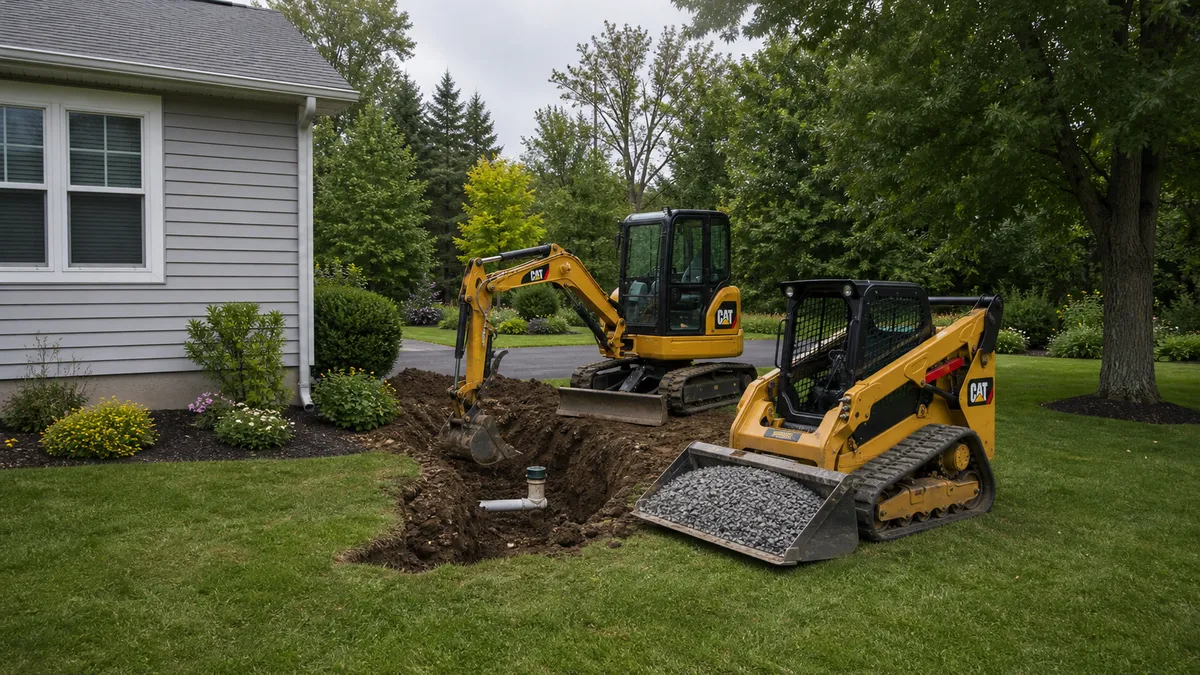
Rome is a city with a lot of country in it. For the parcels past the sewer mains, we test the soil, coordinate a PE stamped design and install the system.
Soils. Permits. Design.
Published county fees and grant terms that apply to Rome septic work.
Yes. Rome covers 75.66 square miles and had 18.7 percent of residents in rural areas in 2020. The City of Rome Code Enforcement office lists installing a septic tank as work that needs a permit.
City of Rome Code Enforcement at City Hall, 198 N Washington St., open Monday to Friday 8:30 to 4:30. Plumbing work in the city must be done by a City of Rome licensed plumber.
Windsor sand, common in Rome, is excessively drained. It passes a perc test easily but treats effluent less as it moves through, so the design focuses on even distribution and keeping the full 100 feet from wells.
Kendaia soil, found on about 5 percent of the city, is wet from about 8 inches in county data. A conventional trench cannot meet the state separation there, so the design is usually a raised system or mound.
Backwell coordinates the testing, design, permit and installation. Designs are prepared and stamped by a New York licensed Professional Engineer.
Properties within 250 feet of Rome Reservoir or the Upper Mohawk River are on Oneida County's priority list, which reimburses 50 percent of eligible costs, up to $10,000, through March 31, 2027.
Yes. Send the address and you get a written price for design and installation in 1 hour.
Why a city needs septic engineers
Rome covers 75.66 square miles, which makes it the second largest city by area in New York. In 2020, 18.7 percent of its residents lived in areas the Census counts as rural. The city has had sewers since 1896 and built the first major treatment plant in the Mohawk Valley in 1932. Today the Rome Water Pollution Control Facility, in service since 1977 and upgraded in 1994, treats up to 12 million gallons a day with activated sludge and nitrification.
But the mains do not reach every road in a city that size. The City of Rome Code Enforcement office lists install a septic tank and drill a well among the work that needs a permit, which tells you plainly that wells and septic systems still exist inside the city line. If you own one of those parcels, this page is for you. Backwell coordinates the soil testing, design, permit and installation. Designs are prepared and stamped by a New York licensed Professional Engineer (PE).
Rome soils: sand, gravel, till and muck
USDA soil data for the city shows Windsor and Alton soils on about 10 percent each, Palms muck about 5 percent, Urban land about 5 percent, Kendaia about 5 percent, Wareham about 4 percent, and Canandaigua and Jebavy about 3 percent each. That is an unusual spread for one municipality, and it means two Rome lots a mile apart can need opposite designs.
- Windsor is excessively drained sandy outwash or windblown sand. It percs very fast. The design job is slowing effluent down and spreading it so the soil can treat it, often with pressure distribution.
- Alton is gravelly outwash and beach material, well to somewhat excessively drained, with bedrock deeper than 60 inches. Often the best septic ground in the city.
- Kendaia is somewhat poorly drained calcareous till where water from higher ground collects. County data shows wet soil from about 8 inches. A conventional trench will not get the separation; a raised system or mound is likely.
- Wareham is wet sand on outwash plains, saturated from about 12 inches in county data.
- Palms muck holds water from 1 foot above to 1 foot below the surface from November to May. It cannot take a field.
Appendix 75-A requires at least 4 feet of usable soil above rock, unsuitable soil and high groundwater for a conventional field, and high groundwater at least 2 feet below the trench bottom.
How a Rome septic permit works
- Send the address. Estimate in 1 hour.
- Deep hole and perc tests. At least one hole at least 6 feet deep and at least two perc tests per system.
- Design. 110 gallons per day per bedroom for new construction. Fields 100 feet from wells and 100 feet from streams, lakes and wetlands.
- City permit. City of Rome Code Enforcement, City Hall, 198 N Washington St., open Monday to Friday 8:30 to 4:30. Plumbing work inside the city must be done by a City of Rome licensed plumber.
- County review if needed. The Oneida County Health Department, 800 Park Ave., Utica, approves alternative treatment technologies for individual homes.
- Install and inspect. Built to the stamped plan.
Problems on Rome parcels
Fast sand next to a well
On Windsor sand a drilled well and a leach field on the same lot is the classic risk. Holding the 100 foot well distance and dosing the field evenly matter more than the perc number. See pressure distribution design.
Wet till behind the house
Kendaia and Canandaigua ground stays saturated close to the surface. Raised systems need high groundwater at least 1 foot below grade and 2 feet of fill percing 5 to 30 minutes per inch. See high water table.
Muck pockets
A muck area in the yard is not the place for the field. The design finds the mineral soil and routes the line there, sometimes with a pump. See wet yard and wetland.
Old system, house sale
Rural Rome houses often have tanks and fields that predate any plan. A replacement design starts with what the soil allows now. See septic replacement design.
Costs and the Rome Reservoir grant
When the county reviews a system, the Oneida County Health Department fee schedule (revised March 2022) lists $500 for an individual sewage system and $150 for a site survey. Windsor sand and Kendaia till produce very different build costs, so the price is written per lot. Send the address for a price in 1 hour.
Rome Reservoir is on Oneida County's septic grant priority list, along with the Upper Mohawk River and its tributaries. Properties within 250 feet can be reimbursed 50 percent of eligible repair or replacement costs, up to $10,000. The application needs an itemized estimate covering engineering and design, labor and materials. The program ends March 31, 2027 or when the $200,000 is used up.
Timeline
One day of testing, then the design and the city permit. A raised system on fill that must settle adds six months through one freeze and thaw unless the fill is granular sand or sandy loam compacted in lifts. Installation is days of equipment time.
Sources
- City of Rome, wastewater
- City of Rome, code enforcement
- Rome, New York (area and rural share)
- NYS DOH, 10 NYCRR Appendix 75-A
- Oneida County Health Department, plan review fee schedule (rev. 3/2022)
- Oneida County Health Department, permit fee schedule (rev. 12/25)
- Oneida County, septic system replacement funding
- Oneida County, public water supply and sewage program
- USDA NRCS, Windsor series
- USDA NRCS, Kendaia series
- USDA NRCS, Alton series
- USDA NRCS, Wareham series
- USDA NRCS, Palms series
- USDA NRCS Web Soil Survey (Oneida County, NY065)